
Washer Not Working? 9 Things to Check Before Calling
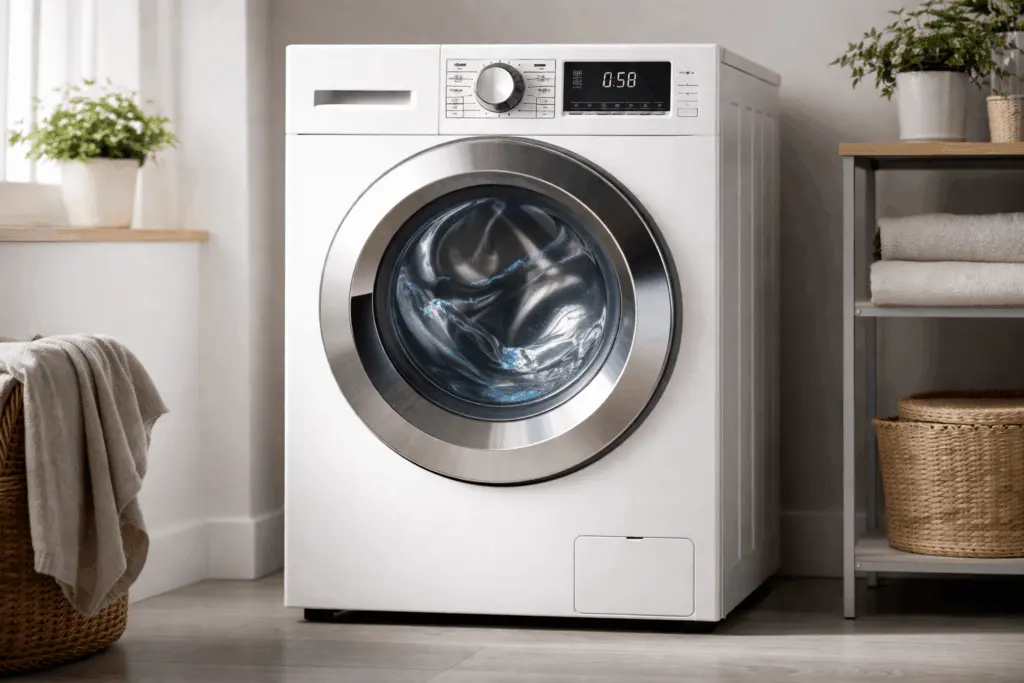
A washer not working is rarely as bad as it looks. Most no-start, no-drain and no-spin problems trace back to power, a door or lid switch, a clogged filter or a load that is too heavy on one side. This article lists nine things to check, in order, explains the differences between front-load and top-load machines, and tells you where to stop and call.
Table of Contents
Before you start, note exactly what the washer is doing. Does it start but stop? Does it fill and not drain? Does it spin slowly or make a noise? Is there an error code on the display? A washer not working in one specific way points to a short list of causes, and the display often names the fault.
Nine checks for a washer not working
Start with the cheap checks for a washer not working. Unplug the washer before you open any panel or reach into the pump area.
- Power and the outlet. Check that the cord is in, the breaker is on and the outlet works. Washers that do not turn on at all often have a tripped breaker or a loose plug.
- Door or lid closure. A front-loader will not start unless the door latch engages. A top-loader depends on a lid switch. Close it firmly and listen for a click. A worn latch or a bent striker is a common cause.
- Cycle settings and child lock. Check that a delay, a child-lock or a control lock is not engaged. Hold the cancel button for a few seconds to reset.
- Water supply. If the washer will not fill, check that both hoses are open, the screens at the inlets are clear and the hoses are not kinked.
- Drain hose and drain filter. A clogged drain pump filter or a kinked drain hose keeps water in the tub. Front-loaders have a small filter door at the bottom front. Have a towel and a shallow pan ready before you open it.
- Load balance. Too many towels in one lump will stop a spin. Redistribute the load and run the spin again. Most washers also stop when a single heavy item is lopsided.
- Leveling and shipping bolts. Check that all four feet sit firmly and that the washer does not rock. On a new front-loader, make sure the shipping bolts were removed.
- Belt and coupling. If the drum does not spin though the motor runs, a worn belt or a failed motor coupling is likely. This usually needs a technician to reach.
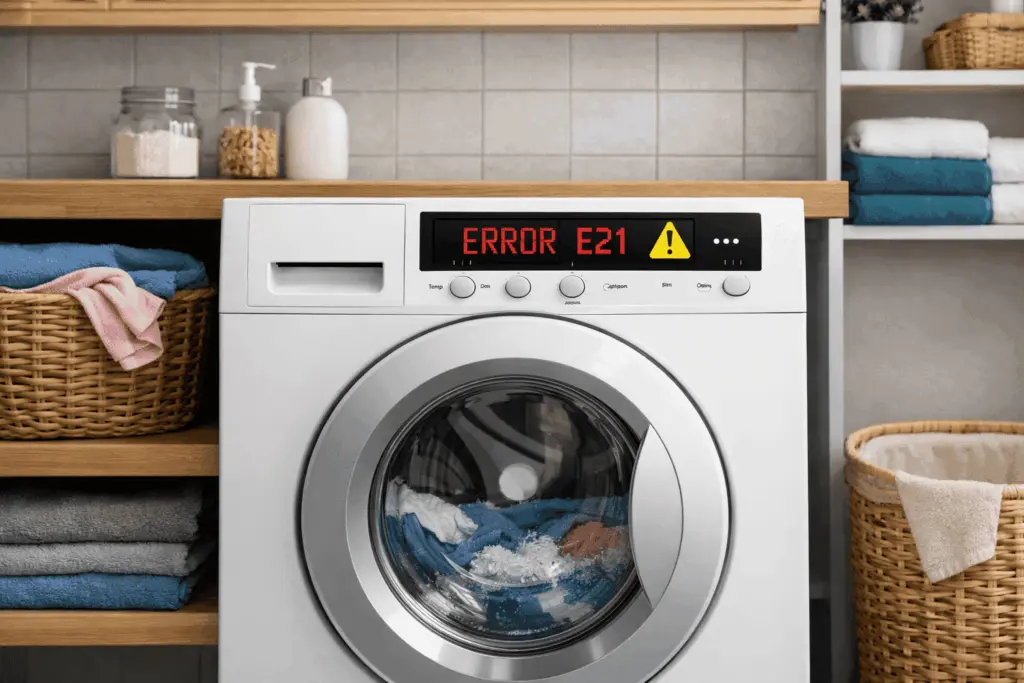
- Error codes. Look up the code in the manual or on the maker’s support site. Codes like F21, E21 or similar often point to drain issues, while others point to the lid lock or the motor.
Washer not working: front-load versus top-load
The two types fail in different places. A front-load washer not working often has a door lock, a clogged filter, a worn gasket that holds mold, or a bearing problem if it is noisy in spin. A top-load washer not working tends to have a lid switch, a worn drive belt, a failing coupler or a bad agitator or basket drive. Top-loaders are easier to open up for inspection. Front-loaders hold water longer behind the door lock, so never force a door that will not open: the machine may still hold water.
One more point saves many service calls: run the test again before you decide. Wet clothes, a half-closed door or a load that shifted can fool a washer once. Empty it, wipe the door seal, start a short rinse and spin cycle and watch what happens at each stage. If the same stage fails twice, you have found the section of the machine that needs attention, and that detail is what the technician needs first.
Symptom guide for a washer not working
- Will not start, no lights: power, breaker, control board or a failed door switch.
- Starts, then stops: unbalanced load, lid switch or door lock, or an overheated motor.
- Fills but will not drain: drain filter, hose or pump.
- Drains but will not spin: lid switch, belt, motor coupler or control board.
- Shakes or walks across the floor: unbalanced load, an unlevel machine or worn suspension.
- Leaks: a loose hose, a worn door gasket, a cracked pump housing or a split tub hose.
When a washer not working means a leak or flood
Turn off the water at the wall valves, unplug the machine and mop up the floor. If water has reached the outlet or the cord, switch off the breaker before you step in the puddle. Check the hoses for bulges and cracks, since a burst hose can flood a laundry room in minutes. Old rubber hoses are the most common source, and a braided steel hose is a sensible upgrade.
If the washer will not drain and a load is stuck inside, bail out water through the drain filter. Do not try to open a door lock with a tool unless the manual describes an emergency release.
Safety rules and the stop-and-call rule for a washer not working
Unplug the washer before you open any panel, and never stand in water near an outlet. Do not bypass a lid switch or a door lock to make the machine run, because those switches stop the drum while someone could reach in. Do not run a washer that is leaking, smoking or smells of burning plastic. If you smell gas in the laundry room, where a gas dryer may sit beside the washer, leave the house and call the gas utility from outside.
Stop and call a technician about a washer not working if any of the following applies.
- The washer is not working after you have checked the power, the lid or door, the filter and the hoses.
- You hear grinding or a loud thud from the drum.
- The control board is dead, or the display is blank while power is present.
- Water leaks from the tub, a burning smell, or sparks.
Repair or replace a washer not working
For a washer not working that is under about ten years old, a pump, belt, lid switch, door lock or control board is often worth repairing. The picture changes when the drum bearing, transmission or tub is the problem, because those jobs are large. Cost depends on the part, the brand and the work involved, and we quote it after the technician has seen the machine. The repair or replace calculator lets you compare.
Our washer repair page covers the brands we service, and our technician visits homes in West Sacramento and Sacramento. When it is working again, follow the tips in our washer maintenance guide, and if you are setting up a new machine see washer installation. ENERGY STAR also has a helpful overview of clothes washers.
If the washer is still not working after the nine checks, book a visit; our service call is $80, and the repair price is quoted after the technician looks at the machine.
Common questions
Why will my washer fill with water but not drain?
The usual causes are a clogged drain pump filter, a kinked or blocked drain hose, or a failed drain pump. Unplug the washer and check the filter and hose first. If the pump hums but no water moves, it likely needs replacing.
What does it mean when a washer shakes violently?
Violent shaking usually means an unbalanced load, an unlevel machine, or on a new washer, shipping bolts left in. Redistribute the load and level the feet. If it still shakes empty, worn shocks or suspension parts may be the cause.
How do I know if the washer is worth repairing?
Look at age, the specific fault and the repair price. A pump, belt or lid switch on a washer under about ten years old is often worth fixing. A failed transmission or drum bearing on an older machine usually points to replacement.
Related guides
Dishwasher Leaking? 7 Places to Check and Fix
A leaking dishwasher usually comes from one of seven spots. The dry-towel test tells you which one, and a few signs tell you when…
Dishwasher Not Working? 6 Signs You Need Repair
Not starting, not draining, not cleaning or too loud: here are the home tests for each, and six clear signs that it is time…
Washer Installation: 8 Steps and Mistakes to Avoid
Washer installation is a one-hour job if the space is ready. Eight steps cover shipping bolts, hoses, leveling and the drain, with a pre-delivery…