Refrigerator Not Cooling? 7 Checks Before You Call
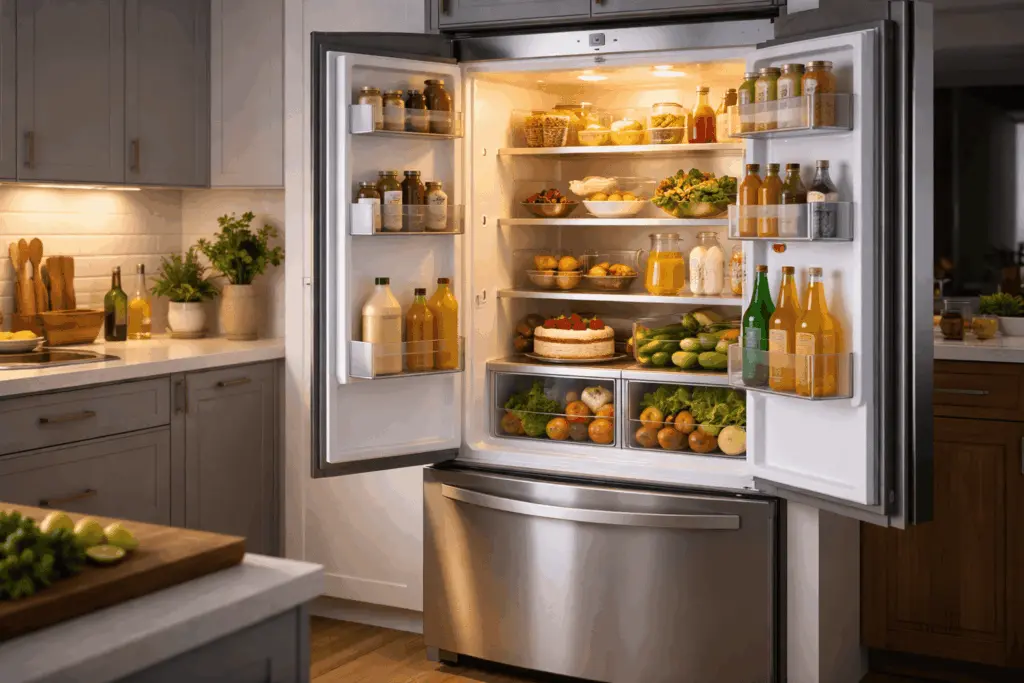
A refrigerator not cooling is stressful because the clock on your groceries starts right away, but the cause is often simple and sometimes you can fix it in ten minutes. This article walks through the checks for a refrigerator not cooling in the order a technician would run them: cheapest and safest first, expensive and technical last.
Table of Contents
Before anything else, read the symptom correctly, because a refrigerator not cooling can mean several different things. Is the whole refrigerator warm, or only the fridge side while the freezer still makes ice? Is the compressor running? Put a hand near the back or bottom of the cabinet and listen. Those two answers narrow the problem more than any guesswork.
Know your targets before you start
A fresh-food compartment should sit at about 37F and the freezer at 0F. The FDA recommends keeping the fridge at or below 40F, and an inexpensive appliance thermometer is the only honest way to know where you are. Put it in a glass of water on the middle shelf, leave it for several hours, then read it. Dial settings such as 1 to 5 tell you nothing about actual temperature.
If the thermometer says 45F or higher, your refrigerator not cooling is a real fault and not a perception problem. If it reads 38F to 40F, you may only need to lower the setting a notch and wait a day.
Seven checks for a refrigerator not cooling
Work down this list one step at a time; each step rules out one cause of a refrigerator not cooling. Stop as soon as the refrigerator starts cooling again, and give it a full day before you decide it is fixed.
- Power and controls. Confirm the plug is seated, the outlet works (test it with a lamp) and the breaker has not tripped. Check that the control was not switched to a demo or off mode, and that the temperature setting was not bumped during cleaning.
- Air flow inside. Overpacked shelves block the vents that carry cold air from the freezer. Pull items away from the back wall and from any vent openings, then wait a few hours.
- Door seals. Close a sheet of paper in the door. If it slides out without resistance, the gasket is not sealing. Wipe it with warm soapy water, since sticky residue lets air through, and look for splits or flat spots.
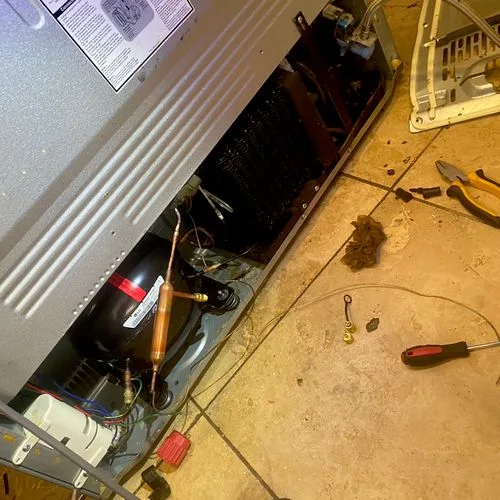
- Condenser coils. Unplug the refrigerator first. Coils sit behind the bottom grille or on the back. Vacuum the dust and pet hair with a brush attachment. Clogged coils make the compressor run hot and long and cool poorly.
- Evaporator fan. Open the freezer door and press the door switch. A working fan makes a steady whir inside the back panel. Silence, grinding or ticking with a refrigerator not cooling points to a bad fan motor or ice touching the blades.
- Frost on the freezer back wall. A thick sheet of frost means the defrost system (heater, thermostat or timer, or control board) has failed and ice is smothering the evaporator. This is the most common reason a freezer stays cold while the fridge warms.
- Compressor and start relay. If the cabinet hums, clicks every few minutes and never settles into a steady run, the start relay or compressor may be failing. This is the check where you stop and let someone else take over.
Refrigerator not cooling but the freezer is fine
This pattern deserves its own paragraph because it points away from the compressor. The freezer is being cooled, so the sealed system works. The fault is in how that cold air reaches the fridge: a frozen evaporator, a failed evaporator fan, a stuck air damper or a blocked air duct. Cleaning the coils will not help when the refrigerator not cooling is only the fridge side. A manual defrost, done by unplugging the unit for a full day with the doors open, will tell you a lot. If cooling returns for a week or two and then fails again, the defrost system is the culprit.
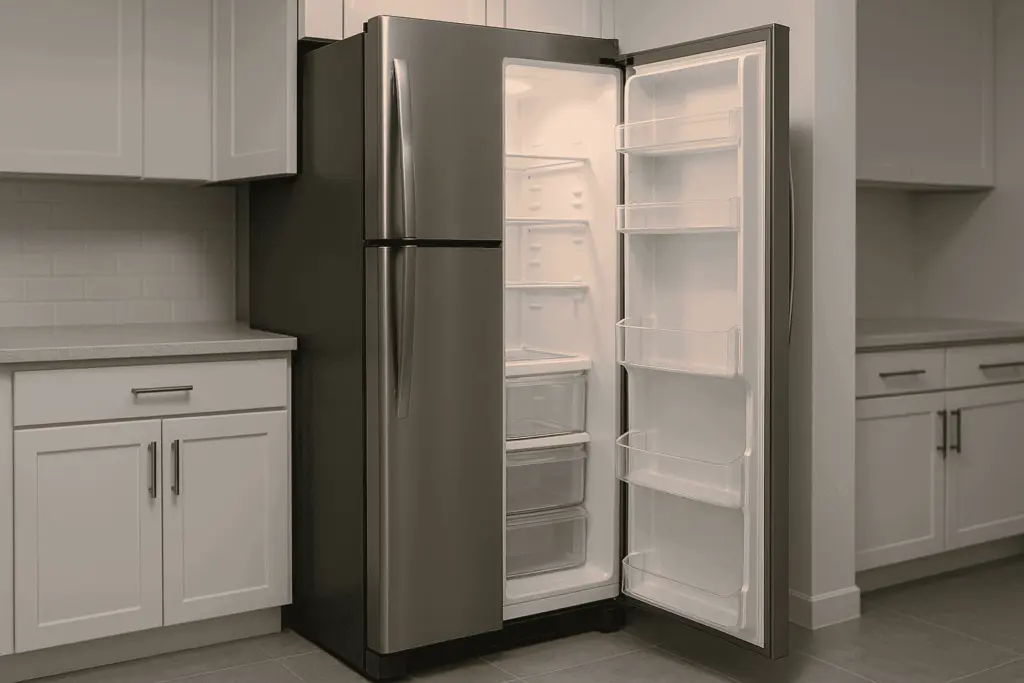
What each refrigerator not cooling symptom usually means
Use this as a quick map. It is a pattern guide, not a verdict, and several faults can overlap.
- Everything warm, compressor silent: power, control board, overload or start relay, or a failed compressor.
- Everything warm, compressor running constantly: dirty coils, a leaking or restricted sealed system, or a condenser fan that has stopped.
- Freezer cold, fridge warm: evaporator fan, defrost fault, damper or duct.
- Fridge cool but not cold, with a ring of water or ice at the bottom: failing gasket or a clogged defrost drain.
- Cold at the top, warm at the bottom: overloaded shelves or a weak air path.
The checks you should leave alone
Some steps look tempting on video and are not safe for a homeowner. With a refrigerator not cooling, do not pull a start relay while the unit is plugged in, do not chip ice off the evaporator with a knife or a screwdriver, and do not use a hair dryer on plastic liners for more than a gentle warm-up. A punctured evaporator line turns a cheap repair into a replacement. Never bypass a defrost thermostat or bimetal to see if the heater works; those parts exist to stop overheating.
Anything involving the sealed refrigerant system, including the compressor, is technician work. So is any test that needs the cabinet live with the back panel off.
Stop and call: the rule for a refrigerator not cooling
Stop troubleshooting a refrigerator not cooling and book a repair if any of these is true after the first five checks:
- The compressor never starts, or it clicks on and off repeatedly.
- You smell burning plastic or see scorched marks at the back.
- The freezer back wall is glazed with ice again within two weeks of a manual defrost.
- Water pools on the floor and you cannot find the source.
- The interior stays above 40F even with clean coils and a good seal.
Unplug the refrigerator if you smell burning, and keep doors shut to save the cold. If it will be more than four hours, move meat and dairy to a cooler with ice.
Repair or replace, and what drives the price
Repair cost for a refrigerator not cooling depends on the part, how hard it is to reach and the brand, and we quote the price only after the technician has looked at the appliance. As a rule, fans, defrost parts, relays and gaskets are reasonable repairs on most units. A sealed-system failure on an older refrigerator deserves a harder look. Our repair or replace calculator lets you put the age and symptoms in before you decide.
Not sure which of the seven checks fits your refrigerator not cooling? The appliance diagnosis tool asks a few questions and points to the likely cause. Our refrigerator repair page lists the brands we work on, and if you live in West Sacramento or Sacramento, our technician comes to your home. Once the unit is cold again, the habits in our refrigerator maintenance article keep it that way. The FDA also explains why a thermometer matters in its guide to refrigerator thermometers.
If you would rather have a technician take a look, you can book a visit online; our service call is $80, and the repair price is quoted after we see the appliance.
Common questions
How long can food stay in a refrigerator that stopped cooling?
A closed refrigerator keeps food cold for about four hours after power or cooling stops. After that, perishable items such as meat, dairy and leftovers that sit above 40F should be thrown out. Keep the doors shut until the problem is sorted.
Why is my freezer cold but the refrigerator section warm?
Most of the cold air for the fresh-food side travels from the freezer through a vent controlled by a fan and a damper. A frozen-over evaporator, a dead fan or a stuck damper blocks that flow, so the freezer stays cold while the fridge warms up.
Is it worth repairing a refrigerator that will not cool?
It depends on the fault and the age of the unit. A fan motor or a defrost part is often worth fixing. A failed sealed system on an older refrigerator usually is not. Our technician can tell you which case you have on the service call.
Related guides
Refrigerator Installation: 9 Steps to Do It Right
Refrigerator installation is mostly measuring, leveling and patience. Here are nine steps from the delivery path to the first day of running, with the…
Refrigerator Leaking Water? 6 Causes and Fixes
A refrigerator leaking water usually comes from one of six places. Here is how to find the source in ten minutes, which fixes are…
5 Refrigerator Repair Signs You Should Not Ignore
Most refrigerators tell you something is wrong weeks before they quit. These five refrigerator repair signs are ranked by urgency, with a sound guide…