Refrigerator Leaking Water? 6 Causes and Fixes
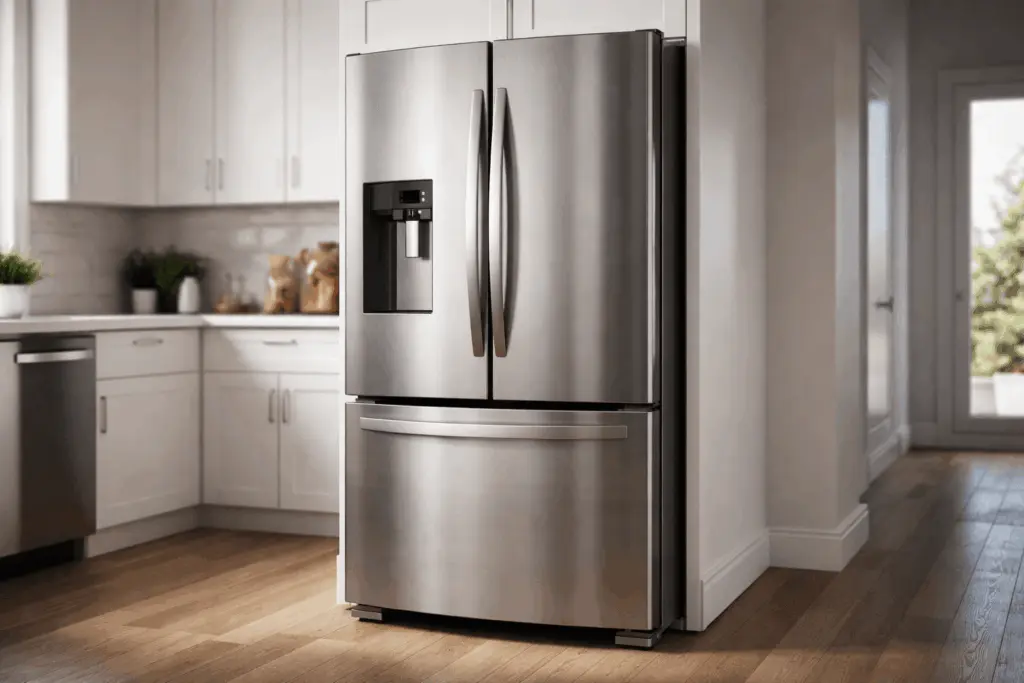
A refrigerator leaking water is rarely a mystery once you know where to look, and in most homes the cause is a blocked drain, a loose fitting or a cracked pan. This article covers the six usual causes, a ten-minute way to track down the source, and the cases where you should stop and call.
Table of Contents
The first thing to know is that a fridge makes water on purpose. Every defrost cycle melts frost off the evaporator, and that meltwater is meant to travel through a drain to a pan under the unit, where it evaporates. A leak means that path is broken, or that a water line to the ice maker or dispenser has failed.
Find the source in ten minutes
Do not mop and guess when you find a refrigerator leaking water. Put down a dry towel or a sheet of cardboard, pull the refrigerator out only far enough to see behind it without stretching the water line, and follow the water to its highest point. Ask three questions in this order.
- Is the water clear or ice-cold? Water inside the unit and clear points to the defrost drain or the dispenser.
- Is it under the unit near the front or the back? Front puddles often come from a door seal or a dispenser tray; rear puddles often come from a drain pan or the supply line.
- Does it drip only when the ice maker or dispenser runs? If so, the leak is in the water system and not the cooling system.
With a refrigerator leaking water you suspect is coming from the dispenser, place a cup under it, run it, and see whether the leak gets worse. Then shut the ice maker off for a day and compare. That alone separates most cases.
Six causes of a refrigerator leaking water
These are the usual reasons for a refrigerator leaking water, listed from most common to least. Check them in order.
- Clogged defrost drain. A small hole at the back of the freezer or fridge carries meltwater away. When it clogs with crumbs or freezes over, water spills down the back wall and onto the shelves. Flush it with warm water from a turkey baster after you unplug the unit.
- Cracked or misplaced drain pan. The pan under the fridge catches the meltwater. If it is cracked, shifted or overfull, it will drip onto the floor. A new pan is a straightforward part on most models.
- Loose or damaged water line. The thin tube feeding the ice maker and dispenser can loosen at the valve or kink behind the unit. Look for wet fittings and a steady drip that continues when no one uses the dispenser.
- Failed water inlet valve. The valve at the back of the fridge opens to fill the ice maker. If it cracks or sticks, it can drip constantly. This part is a replacement, not a cleaning job.
- Door seal that is not sealing. Warm humid air entering the fridge condenses into water on the shelves and drips out. Do the paper test on the gasket and clean or replace it as needed.
- Ice maker or dispenser leak. A frozen fill tube, a cracked reservoir or an overfilled tray all cause drips. A tube that has frozen over often makes ice that overflows and melts onto the floor.
A refrigerator leaking water inside versus outside
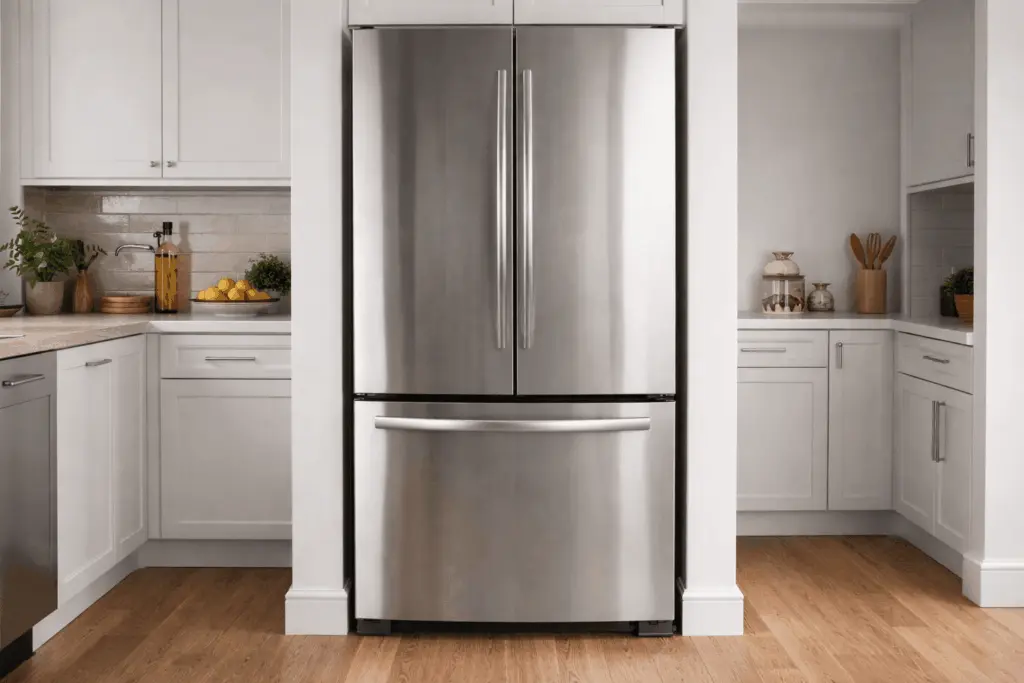
Where the water shows up changes the diagnosis. If your refrigerator leaking water starts inside, at the bottom of the fridge or under the crispers, suspect the defrost drain or a bad seal. If the water appears under the unit and the inside is dry, suspect the pan, the inlet valve or the supply line. If it appears in the freezer as a block of ice, look at the fill tube and the drain together.
What you can safely fix when a refrigerator is leaking water
Several fixes for a refrigerator leaking water are reasonable for a careful homeowner. Unplug the unit before you do any of them.
- Clear the defrost drain with warm water and a soft brush, then run a short cycle and check that water drains and does not back up.
- Reseat or replace a pushed-in fill line fitting. Shut off the water at the wall valve first and push the tube all the way in until it seats.
- Replace a water filter that is loose or cross-threaded. A poorly seated filter is a common cause of a dispenser drip.
- Level the refrigerator so that the door closes gently and water drains toward the back pan.
- Reposition the drain pan if it has slid out of place.
A refrigerator leaking water that stops after one of these steps should be watched for several days. If water returns, the problem is deeper than the surface.
When a leak is a safety or flooring risk
Water and electricity are a bad mix. If a refrigerator leaking water is also near an outlet, a power strip or the compressor compartment, do not stand in the puddle and reach for the plug. Turn off the breaker first, then dry the area. Also act quickly when water runs under cabinets or onto a wood or laminate floor, since swelling and mould start within a day or two.
Never use a space heater or a hair dryer to speed up a defrost, and do not cut or splice a water line with the supply on. If you ever smell gas in the kitchen while dealing with a leak, leave the home and call the gas utility from outside.

Stop and call
Call a technician about a refrigerator leaking water if you see any of these. They are all signs the fault goes past a drain or a fitting.
- Water keeps returning after you cleared the drain and reseated the line.
- The leak is behind a panel, inside the cabinet walls or under the floor.
- There is a burning smell, a tripped breaker, or the fridge is warm as well as wet.
- The dispenser or ice maker valve drips with the ice maker switched off.
A repair visit for a refrigerator leaking water is also a chance to catch a failing seal or valve before it floods. The price of fixing a refrigerator leaking water depends on the part, the model and how much has to come apart to reach it. A drain pan or a fill line is a small repair; an inlet valve or sealed evaporator is more involved. We give you a repair price once the technician has looked at the unit. If the refrigerator is old and the leak is just one of several problems, the repair or replace calculator will help.
Our refrigerator repair page explains how a visit works, and for homes in West Sacramento the technician comes to you. The appliance diagnosis tool can also walk through the symptoms. To reduce the chance of leaks later, our refrigerator maintenance article includes a drain flush and a gasket check. The water-quality side, such as filter timing, is covered by the maker of your unit, and ENERGY STAR keeps a general overview of efficient refrigerators.
If the source is still unclear after the ten-minute search, you can book a visit; the service call is $80 and the repair price is quoted after we see the refrigerator.
Common questions
Why is water pooling inside the bottom of my fridge?
Meltwater from the defrost cycle normally runs down a drain at the back of the fridge. When that drain is clogged with food debris or ice, the water backs up and spills into the crisper drawers and onto the floor.
Will a leak damage my floor?
Yes, if it continues. Slow leaks soak wood and laminate, lift vinyl edges and can seep into the subfloor before you see a puddle. Pull the unit out, dry the area and fix the source soon, especially on a floor with a water line.
Can I just shut off the water supply and keep using the fridge?
Often yes. If the leak comes from the ice maker or water dispenser line, closing the valve behind the fridge stops it and the refrigerator still cools. Leave the ice maker arm up or switched off until the part is replaced.
Related guides
Refrigerator Installation: 9 Steps to Do It Right
Refrigerator installation is mostly measuring, leveling and patience. Here are nine steps from the delivery path to the first day of running, with the…
5 Refrigerator Repair Signs You Should Not Ignore
Most refrigerators tell you something is wrong weeks before they quit. These five refrigerator repair signs are ranked by urgency, with a sound guide…
Refrigerator Not Cooling? 7 Checks Before You Call
A refrigerator not cooling is usually one of a handful of faults. Here are seven safe checks, in the order a technician would run…