
Ice Maker Maintenance: 6 Tips for Summer and Beyond
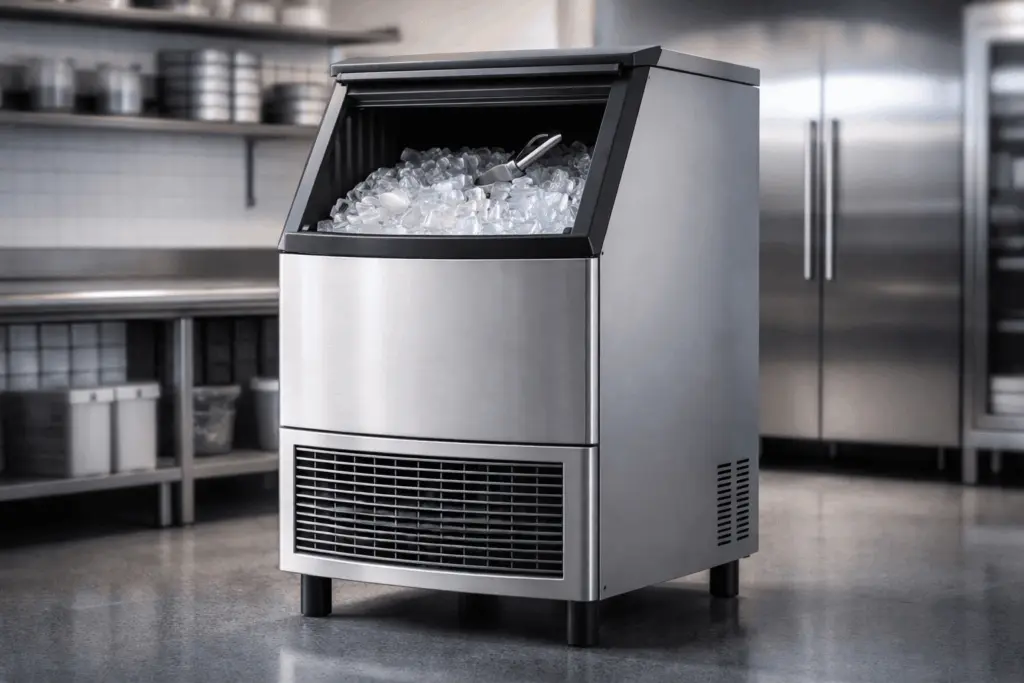
Ice maker maintenance is the kind of chore that is easy to forget until the cubes come out small, cloudy or smelling like the freezer. A few simple tasks, done a few times a year, keep an ice maker working at full speed in the summer when everyone wants ice. This article gives you six tips, a quarterly checklist and the point where a repair is the better choice.
Table of Contents
An ice maker has one job that is easy to disturb: it takes water, freezes it and moves it. Anything that interferes with the water, such as scale, a clogged filter or a kinked line, or with the freezing, such as a warm freezer, shows up in the cubes. Ice maker maintenance addresses both ends, and skipping it lets small faults build up.
Six tips for ice maker maintenance
- Clean the bin and the tray every quarter. Empty the bin, discard the ice, and wash it with warm water and mild dish soap. Rinse well and dry it before it goes back.
- Wipe the surfaces with vinegar. A solution of equal parts white vinegar and warm water cuts light scale and odors on removable parts. Rinse thoroughly with clean water afterward.
- Change the water filter on schedule. About every six months for most models, sooner with heavy summer use or if the ice tastes off. A clogged filter starves the ice maker of water.
- Watch for hard-water scale. White crust on the mold or in the fill tube means minerals are building up. Descale with the method in your manual.
- Shut it down properly for long absences. Raise the bail arm or switch the ice maker off, empty the bin, and close the water valve for a long trip.
- Prepare for summer demand. Check the freezer temperature, clear space around the unit and keep a spare filter on hand before the first heat wave.
Ice maker maintenance with vinegar or a descaler
Vinegar is fine for the bin, the scoop and exposed plastic. For the water lines and the valve, some makers recommend a descaler made for ice machines instead, and a few warn against vinegar inside the lines. Read your manual first. A safe method for the bin: remove it, wash it, soak it in a vinegar solution for ten minutes, rinse well and let it air-dry. Throw away the first batch or two of ice after cleaning so you do not serve a vinegar taste to guests.
What skipped ice maker maintenance looks like
The signs arrive in a predictable order, and they are the reason to keep to a schedule. First the ice tastes or smells of the freezer. Then the cubes shrink or turn hollow because the filter or the valve is restricting water. After that you may see ice clumped together, a crust of scale on the mold, or a bin that never fills in a day. At the far end, the inlet valve sticks or leaks, and a repair is needed. Ice maker maintenance stops that chain at the first link. A filter costs far less than a valve, and a ten-minute wipe-down costs nothing.
It also matters for hygiene. A damp bin that is never washed can grow a film that you cannot see, so wash it even when the ice looks clear. Keep food in sealed containers, since open food in the freezer gives ice a stale taste.
Hard water in Sacramento and ice maker maintenance
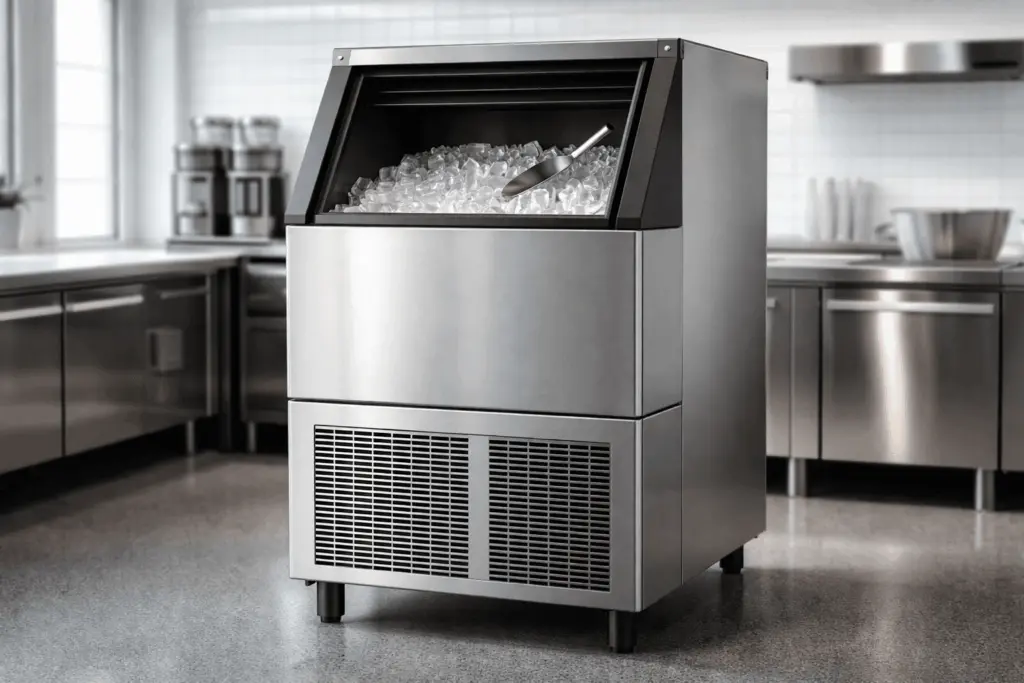
Many homes in the Sacramento area have hard water, and hard water leaves scale. In an ice maker the scale gathers on the mold, in the fill tube and inside the inlet valve, where it can make the valve slow or leaky. A water filter takes out some of the minerals but not all. If the ice has a white crust, if the cubes are small, or if the water flow into the mold slows, scale is a likely cause. Ice maker maintenance in hard-water areas means changing the filter promptly and descaling at least once a year.
If you see mineral buildup on the dispenser or the fill tube and it keeps coming back, a technician can check the valve for wear. The effect of scale is cumulative, which is why a quick check each season is easier than a repair.
Summer prep and a quarterly ice maker maintenance checklist
An ice maker works hardest from June to September: more drinks, more guests, more door openings. Before summer, check that the freezer holds about 0F, because a warm freezer is the number one reason the ice maker cannot keep up. Make sure the refrigerator has air space at the back and sides, vacuum the condenser coils, and check the water line for kinks. Our refrigerator maintenance guide covers those tasks in more detail.
Copy this ice maker maintenance checklist into your calendar. It takes about fifteen minutes.
- Empty and wash the ice bin and scoop.
- Wipe the mold area and the tray with vinegar solution if the manual allows.
- Check the filter date and replace it if it is due.
- Look at the fill tube for white scale or ice.
- Check the freezer temperature with a thermometer.
- Inspect the water line and valve for drips or wet spots.
- Discard the first batch of ice after any cleaning.
Safety rules and when to stop and call
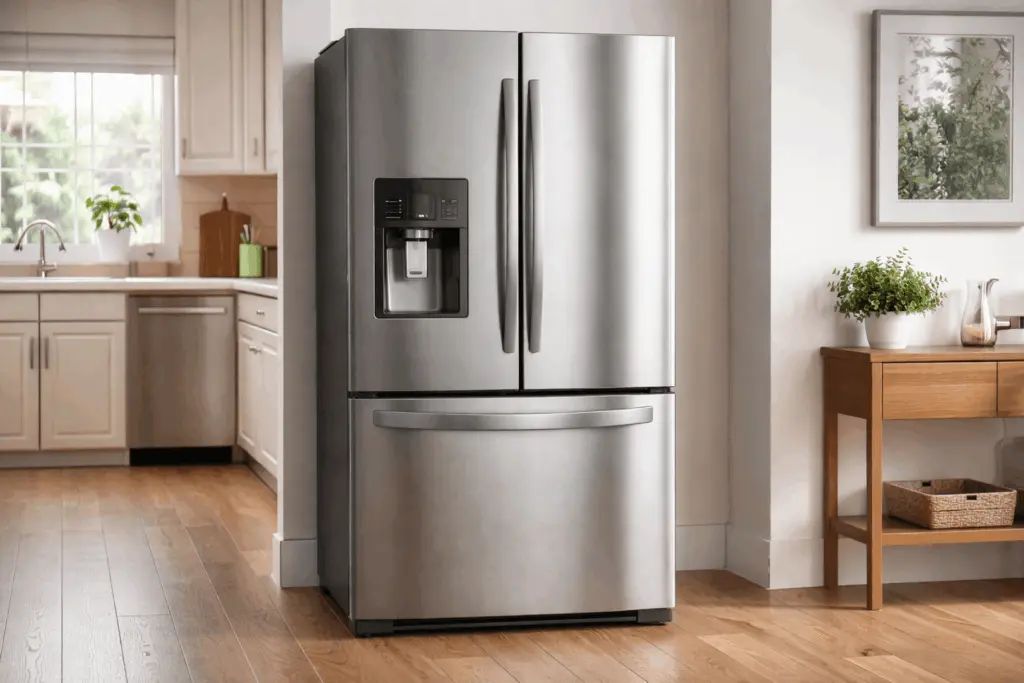
Unplug the refrigerator, or switch off the breaker, before you touch anything inside the ice maker housing. Shut off the water before you disconnect a line, and do not use a sharp tool to chip ice from the mold. Anything involving the inlet valve wiring, the module or the sealed refrigerant system is for a technician.
Stop your ice maker maintenance and call a technician if the ice maker is not working after cleaning, if water drips from the dispenser or from the back of the unit, if you hear buzzing while no water enters, or if ice is stuck in the mold even after a thaw. Our ice maker not working article walks through the troubleshooting steps for a unit that has already stopped. For the repair itself, our refrigerator repair page covers ice makers, and we visit homes in West Sacramento and Sacramento.
If you are still choosing a unit and want an efficient model, ENERGY STAR lists refrigerators with built-in ice makers. A repair price is quoted after we look at the appliance, and the repair or replace calculator can help with older units.
Regular ice maker maintenance prevents most avoidable repairs, but not all of them. If you would like the filter, valve or mold checked by a technician, book a visit; our service call is $80.
Common questions
Can I clean my ice maker with vinegar?
Yes for the bin and removable parts. Mix equal parts white vinegar and warm water, wipe, then rinse well with clean water. For the internal water lines, follow the descaling steps in your manual, since some makers advise against vinegar there.
How often should I replace the ice maker water filter?
Most makers recommend about every six months, or sooner if the ice tastes off or the flow slows. Heavy use in summer and hard water can shorten that. The filter indicator light on your model is a useful reminder.
Should I turn the ice maker off when I go on vacation?
For a long trip, yes. Lift the bail arm or switch it off, empty the bin, and close the water valve if you are away more than a few weeks. Restart when you return and discard the first batches.
Related guides
Ice Maker Not Working? 8 Fixes to Try First
An ice maker not working is usually a frozen tube, a clogged filter or a freezer that is too warm. Here are eight fixes…
Oven Repair Cost in West Sacramento: What Sets the Price
Nobody can name your oven repair cost before someone looks at the oven. Here is what moves the price up or down, and how…
Microwave Installation: Over-the-Range and Built-In
Setting a countertop microwave on the counter is easy. An over-the-range or built-in unit is a different job. Here is what the work involves…