Ice Maker Not Working? 8 Fixes to Try First
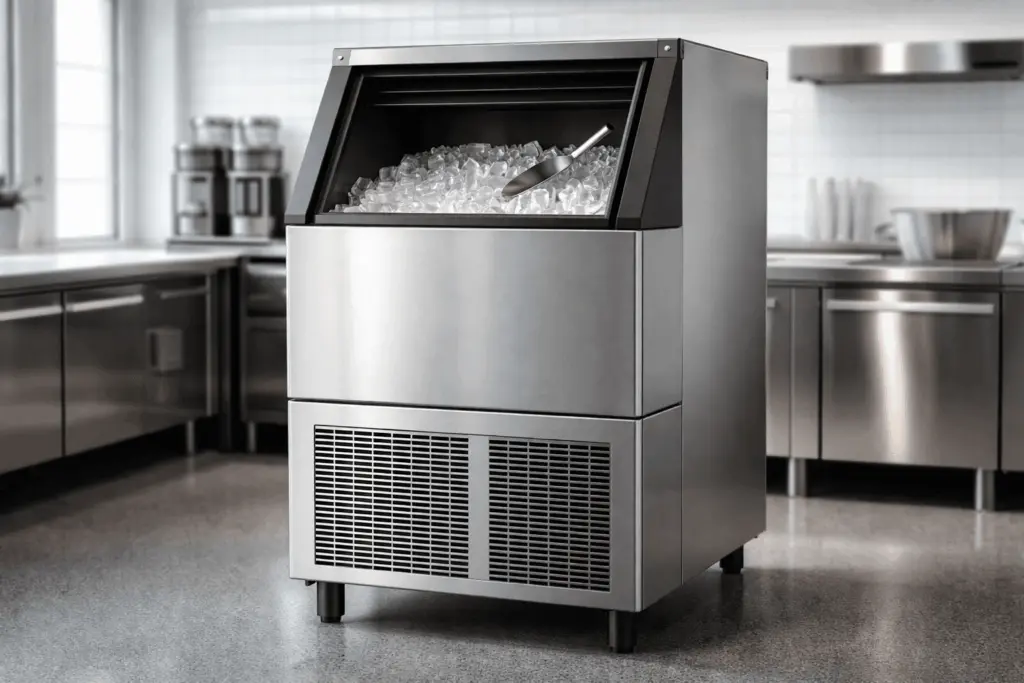
An ice maker not working is annoying, but the cause is more often a small thing than a failed part. A frozen fill tube, a clogged water filter, a bail arm left in the wrong position or a freezer that is not cold enough account for most of the calls we hear about. This article gives you eight fixes in order of effort and tells you where to stop.
Table of Contents
Start by noticing what the ice maker is doing, because the symptoms of an ice maker not working differ. Is there no ice at all, or is it making small, cloudy or hollow cubes? Is the bin empty while the mold is full of ice? Is water leaking? Each pattern leads to a different cause, and the notes under each fix below tell you which one fits.
How the ice maker works, and why it stops
Knowing the cycle makes an ice maker not working easier to read. A valve opens and fills a small mold with water, the freezer air turns it to ice over a few hours, a thermostat senses that it is frozen, a heater loosens the cubes and a motor sweeps them into the bin. The bail arm or a sensor stops the cycle when the bin is full. Water, cold, heat and motion all have to work in order, and a fault in any step looks like an ice maker not working.
Eight fixes for an ice maker not working
Take these fixes for an ice maker not working one at a time. The first four take a few minutes and cost nothing.
- Check the switch and the bail arm. Many ice makers have a wire bail arm or an on-off switch. If it is in the up or off position, the machine will not run. Lower the arm or turn the switch on, then wait a few hours.
- Check the freezer temperature. Ice makers need the freezer at about 0F, and many will not cycle above about 10F. Put a thermometer in the freezer and adjust the control if needed.
- Look for a jammed or blocked mold. Cubes frozen together or a block of ice in the mold can stop the harvest. Remove the loose ice, break up the clump and let the unit reset.
- Make sure the water supply is on. Check that the shutoff valve behind the fridge is open and the line is not kinked. Water pressure should be steady; a weak trickle gives small cubes.
- Replace the water filter. A clogged filter restricts flow to the ice maker. If the filter is old, replace it, or try running the machine without it by using a bypass plug if the manual allows it.
- Thaw a frozen fill tube. If the fill tube at the back of the mold has frozen over, no water gets in. Unplug the refrigerator and let it thaw with the door open, or use a hair dryer on low from a safe distance. Do not use heat on plastic parts for long.
- Test the water inlet valve. If the supply is open, the filter is new and the tube is clear, the valve may be failing. A buzzing sound when the ice maker calls for water, or a trickle that never fills the mold, points to the valve. It is replaced by a technician or an experienced DIYer, with the water and power off.
- Check the ice maker module or control. If the arm is down, the freezer is cold and water is reaching the mold but no cycle starts, the module or its thermostat may have failed. This is the last check and usually needs a technician.
Ice maker not working because of the freezer
Sometimes the ice maker is fine and the freezer is the problem. If the freezer is warm, ice will never form properly, and that points to a sealed-system issue, a failed fan or a defrost fault. Our guide to a freezer not freezing covers those. If the whole refrigerator is warm too, treat that first, because an ice maker not working is often a side effect, and come back to the ice maker afterward.
Ice maker not working right: small cubes, cloudy ice and bad taste
If your ice maker not working properly shows up as ice you do not want to drink, the clues are in the cubes.
- Small or hollow cubes: low water flow. Replace the filter, check for kinks and test the pressure.
- Cloudy cubes: normal. Air and minerals in the water make ice cloudy. Hard water adds a white scale.
- Cubes that taste or smell off: old ice, an old filter or food odors in the freezer. Empty the bin, wash it and replace the filter.
- Clumped ice: the ice has partly melted and refrozen, often from door openings or a warm freezer.
What the fixes cannot do
If you have worked through the list with the ice maker not working still, the part is probably worn out. Inlet valves, modules and motors fail with age, and Sacramento’s hard water speeds up scale in valves and tubes. A technician can test each part with a meter and replace only the one that failed, which keeps the repair cost down. The price depends on the part, the brand and how difficult it is to reach, and we quote it after we have looked at the unit.
If the refrigerator is older and has several problems, our repair or replace calculator helps you decide. For routine care that keeps scale away, read our ice maker maintenance guide.
Safety rules and when to stop
Unplug the refrigerator, or turn off the breaker, before you reach near the ice maker or touch its wiring. Shut off the water supply before you disconnect a line. Do not chip ice out of a mold with a knife, screwdriver or ice pick, because the heating element and the plastic parts are fragile. Never work on the sealed refrigerant system, and never bypass a thermostat or fuse to force a cycle.
Stop and call if your ice maker not working comes with any of the following.
- Water is leaking onto the floor or inside the freezer and you cannot find the source.
- The ice maker is not working after you have checked the arm, the temperature, the filter and the tube.
- You hear a buzz or hum with no water entering the mold.
- You smell burning or see scorched wires near the ice maker.
- The refrigerator is warm as well as the ice maker not working.
Our refrigerator repair page covers ice makers on the brands we service, and our technician visits homes in West Sacramento and Sacramento. If the ice maker is built into a refrigerator you are still shopping for, ENERGY STAR has a useful overview of efficient refrigerators.
If you would rather hand the problem over, book a visit and describe what you found; the service call is $80.
Common questions
Why is my ice maker making small or hollow cubes?
Small or hollow cubes mean the mold is not getting enough water. A clogged filter, a partly frozen fill tube, low water pressure or a weak inlet valve are the usual causes. Replace the filter first and check the supply line for kinks.
How long does an ice maker take to make a batch?
Most home ice makers take around three to four hours per batch once the freezer is cold enough, and a new unit can take a day to start. If nothing arrives after 24 hours, work through the checks below.
Is ice from a failing ice maker safe to use?
Ice that looks clear and tastes normal is generally fine. If it tastes of plastic or smells odd, or if the freezer has been warm, throw it out, clean the bin and discard the first few batches after the repair.
Related guides
Ice Maker Maintenance: 6 Tips for Summer and Beyond
Ice maker maintenance keeps cubes clear and the machine running when demand peaks. Six tips cover cleaning, filters, scale, shutdown and summer prep, with…
Oven Repair Cost in West Sacramento: What Sets the Price
Nobody can name your oven repair cost before someone looks at the oven. Here is what moves the price up or down, and how…
Microwave Installation: Over-the-Range and Built-In
Setting a countertop microwave on the counter is easy. An over-the-range or built-in unit is a different job. Here is what the work involves…