
Dishwasher Not Drying? 6 Reasons and Fixes
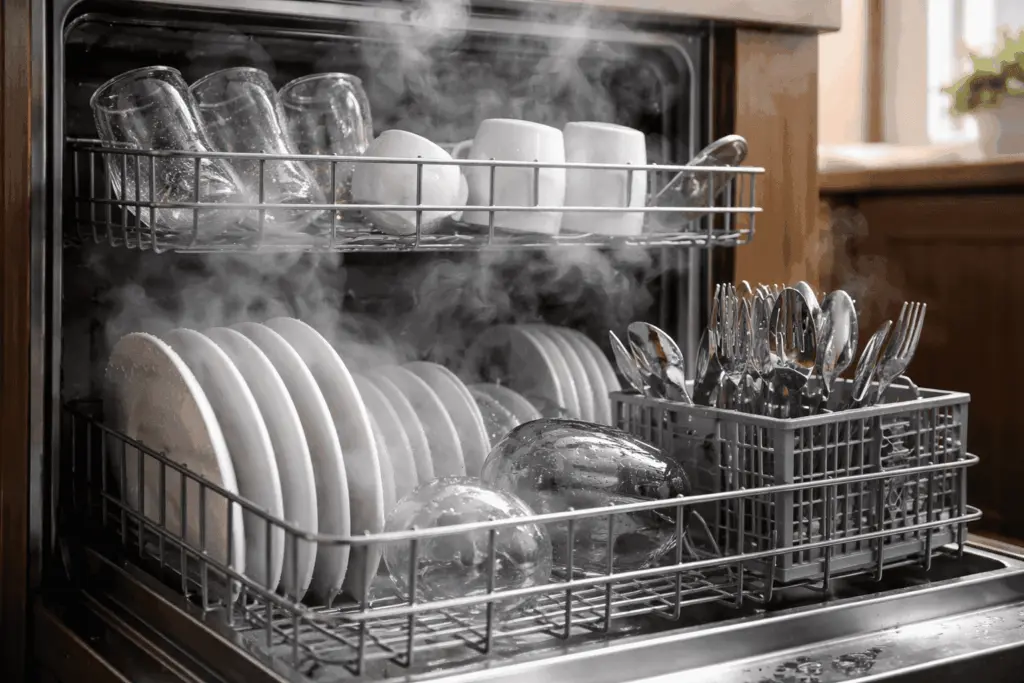
A dishwasher not drying leaves you with wet plates, pooled water in cup bottoms and a fogged-up door. Before you pay for a repair on a dishwasher not drying, know that about half the causes are settings or loading habits, and the rest are a few specific parts. This article lists six reasons in the order we would rule them out.
Table of Contents
First, find out which kind of dishwasher you have, because it changes what “dry” means. Many models have a visible heating element at the bottom of the tub. Others, including a lot of newer energy-saving models, have no exposed element and dry by condensation: hot rinse water warms the dishes and the stainless tub, moisture condenses on the cold walls and drains away. On those, a little water left on plastic is normal.
Six reasons for a dishwasher not drying
- The heated-dry or high-temperature option is off. Many dishwashers remember the last setting. An eco or air-dry setting skips the heat. Pick a normal cycle, turn on heated dry or sanitize, and test one load.
- The rinse aid dispenser is empty. Rinse aid makes water sheet off the dishes. Without it, droplets cling and look like a drying fault. Open the cap on the door, look for the fill indicator and top it up.
- The load is blocking the airflow. Cups and bowls that face up hold water. Plastic holds less heat than ceramic, so it stays wet. Face items downward and at an angle, and do not nest bowls.
- The heating element has failed. On models with an exposed element, a broken one means warm water and cold, wet dishes.
- The vent or fan is stuck. Some dishwashers open a vent in the door or run a small fan at the end of the cycle. If it is jammed with residue or the motor has died, the moist air stays inside.
- A control, high-limit thermostat or thermistor fault. These parts tell the dishwasher when to heat and when to stop. If one fails, the final heated drying phase never starts, or the cycle ends early.
Rule out the cheap causes of a dishwasher not drying first
Start with items 1 to 3, because they fix most cases of a dishwasher not drying. Run a normal cycle with heated dry on, a full rinse-aid reservoir and the dishes loaded with the openings facing down. Then open the door right when the cycle ends, rather than hours later. Dishes that are warm and mostly dry, with only plastic still wet, mean the dishwasher is fine, since a dishwasher not drying only on plastic is not a fault. Wet everywhere and the tub is cool to the touch means it did not heat.
Also check whether the hot water at the kitchen sink is hot. The dishwasher heats its own water, but it fills from your supply, and a cold fill makes any dishwasher not drying problem worse. Run the kitchen tap until it is hot before starting the cycle.
Our page on dishwasher maintenance covers rinse aid and filter care, which also affect how well the machine dries.
How to test for a dishwasher not drying because of the element
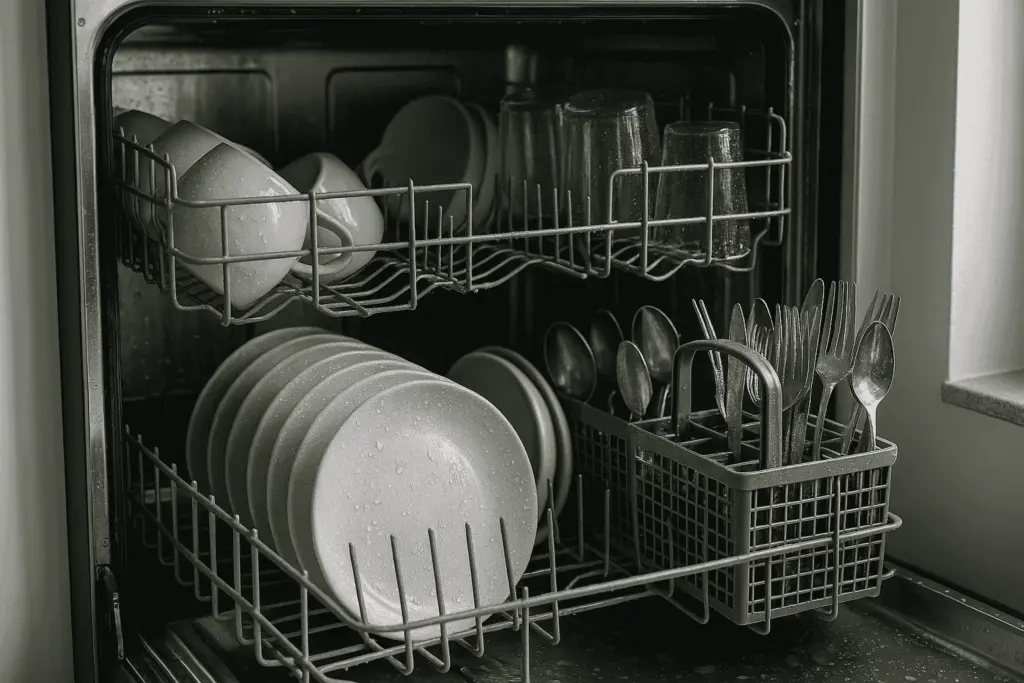
Switch off the dishwasher’s breaker, or unplug it if you can reach the cord, and wait a few minutes. Look at the element on the tub floor. A visible blister, a crack, a bent coil or a burn spot means it has failed. A normal-looking element can still be open inside. The only way to know is to measure continuity with a multimeter, which a technician does with the element disconnected.
Do not run a dishwasher not drying on a test cycle with the door open to inspect the element or test it live. Water and mains power do not mix, and the element sits at the bottom where water collects.
If you do not have a visible element, skip this test. The heating there is built into the tub or the drain housing, and the next suspects are the thermistor and the control board, which need professional testing. Brand names do not change the logic, and the same checks apply to any make: GE, Bosch, Whirlpool, KitchenAid, Samsung, LG and others all use some version of the parts above.
What a dishwasher not drying repair costs depends on these things
We do not quote prices in an article, because the number depends on what is found. The main factors are the part itself, how hard it is to reach, and whether the dishwasher has to be pulled out from the counter. An element is usually reached from inside the tub or from the lower access panel. A control board or a fan vent can take more time.
The age of the machine counts too, and a dishwasher not drying for the third time this year is a different conversation from a first complaint. If the dishwasher is old, the tub is rusting and the door is leaking, spending on a heating element may not be sensible. The repair or replace calculator helps you weigh age against a likely repair.
Stop and call us if a dishwasher not drying comes with this
Stop using the dishwasher and book a visit if you smell burning plastic, see melted items touching the element, or notice scorch marks on the tub or the door seal. The same goes for a tripped breaker when the dishwasher runs, water leaking from the door, or a tub that stays so hot that you cannot touch it after a cycle. Switch off the breaker while you wait.
With a dishwasher not drying, never bypass a thermal fuse or limit switch to force heat. Those parts protect the machine from overheating.
Small habits that prevent a dishwasher not drying
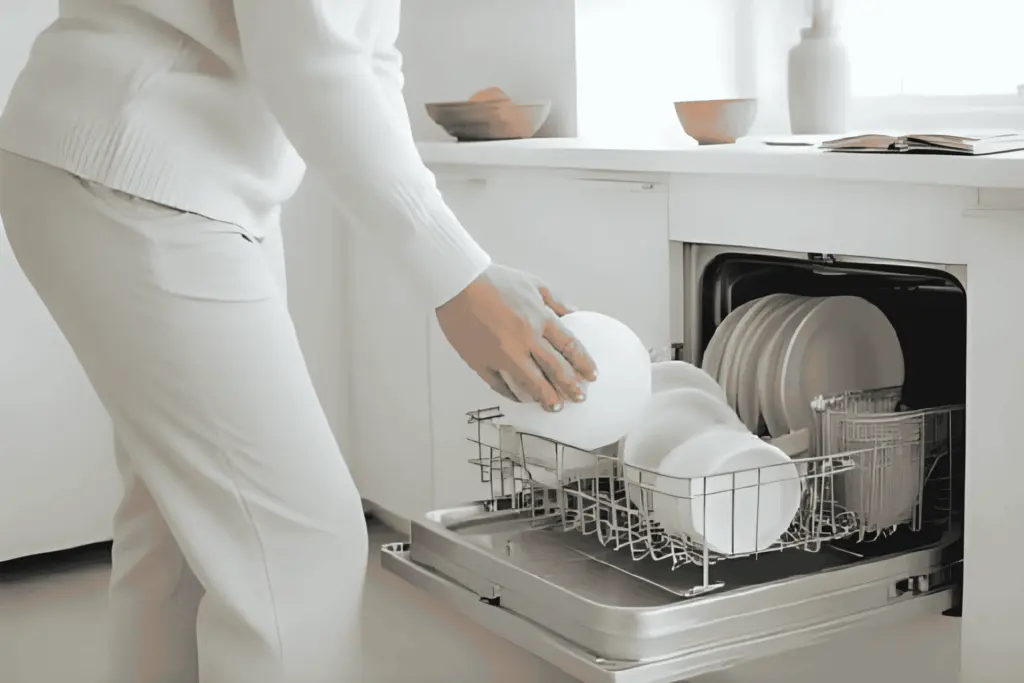
- Let the cycle finish, then crack the door open a few inches for fifteen minutes before unloading.
- Put plastic on the top rack, away from the element, and expect it to need a towel.
- Use a rinse aid made for dishwashers and refill it when the indicator is low.
- Clean the filter and the spray arm holes monthly so water drains fully.
- Avoid overloading the bottom rack, which blocks the heat and spray.
The ENERGY STAR dishwasher page explains why some newer models dry less aggressively to save energy. That context helps you judge whether a slightly damp load is a fault or a design choice.
If the dishwasher not drying problem persists after those checks, we can help. We work on all major dishwasher brands in West Sacramento, Sacramento, Davis, Woodland and nearby towns, and we cover the wider dishwasher repair side of things too. You can book a visit and describe what you have tried. The service call is $80, and many repairs are completed on the same day because our vehicles carry common parts.
Common questions
Is it normal for plastic to stay wet in the dishwasher?
Yes. Plastic holds less heat than glass or ceramic, so water on it evaporates slowly or beads up. Put plastics on the top rack and wipe them if needed. Wet ceramic and glass is the real warning sign.
Does rinse aid really make a difference?
It does. Rinse aid lowers surface tension so water sheets off dishes instead of forming droplets. Many dishwashers, especially those without an exposed element, depend on it to finish drying, so keep the dispenser filled.
Can I test the heating element myself?
You can inspect it for cracks or blisters after switching off the breaker, but confirming a failure needs a multimeter on a disconnected element. A technician can do that safely and tell you whether the element or a control is at fault.
Related guides
Dishwasher Leaking? 7 Places to Check and Fix
A leaking dishwasher usually comes from one of seven spots. The dry-towel test tells you which one, and a few signs tell you when…
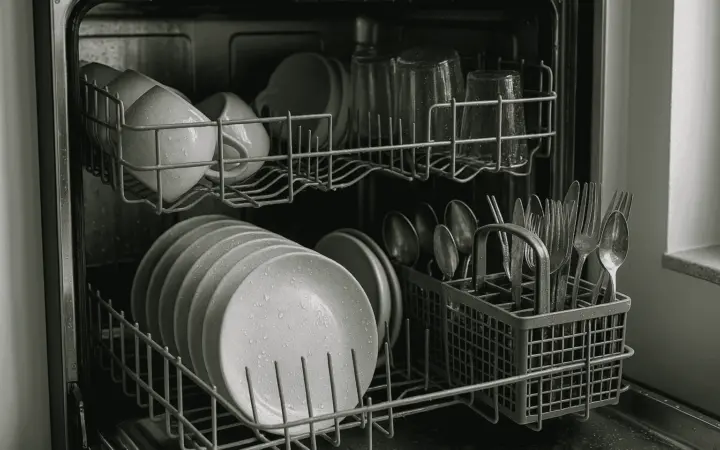
Dishwasher Not Working? 6 Signs You Need Repair
Not starting, not draining, not cleaning or too loud: here are the home tests for each, and six clear signs that it is time…
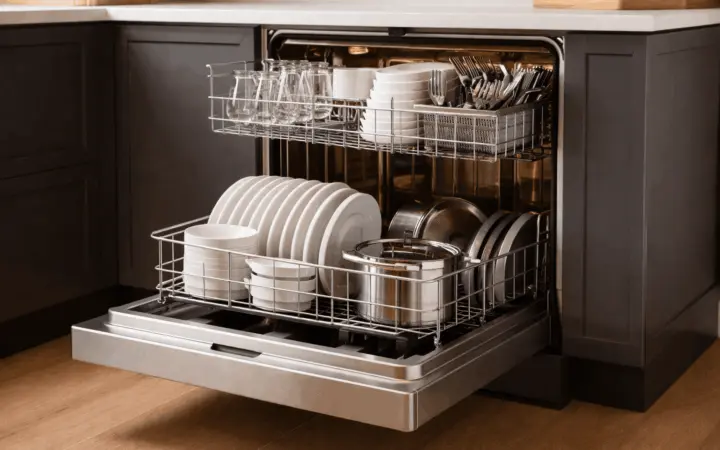
Dishwasher Installation: 7 Steps and Warning Signs
A good dishwasher installation comes down to power, water in, water out and a level tub. Here are the seven steps and the signs…