
Dishwasher Maintenance: 6 Tips to Stop Smells and Wear
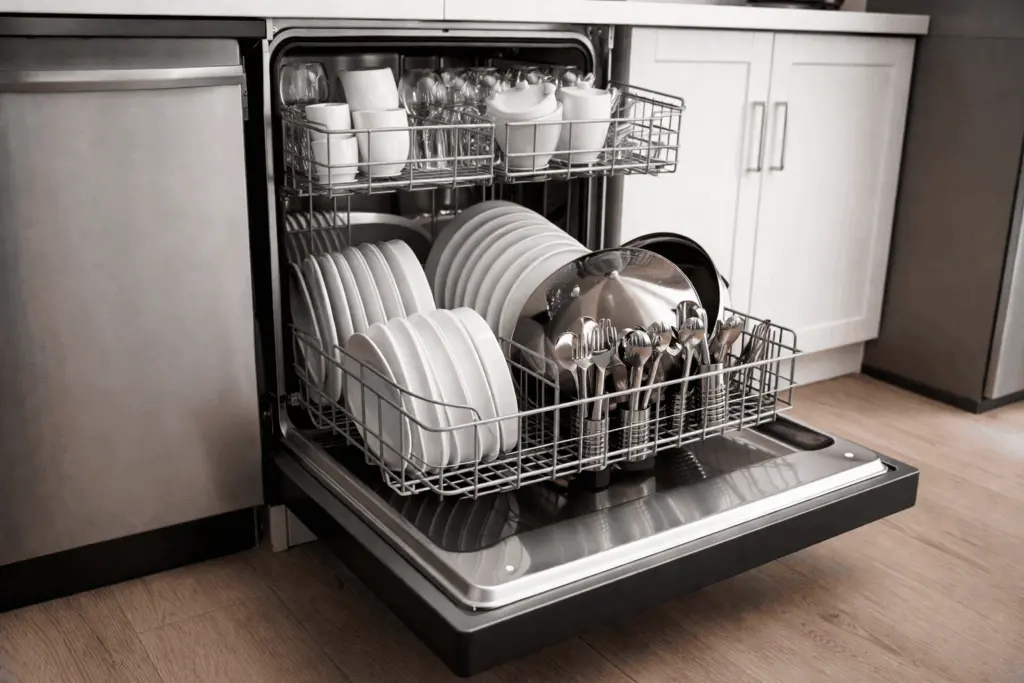
Dishwasher maintenance takes about ten minutes a month and decides whether the machine smells fresh or sour, whether the glasses come out clear or cloudy, and how long the pump and spray arms keep working. Nothing in dishwasher maintenance needs special skills. You need a soft brush, white vinegar or dishwasher cleaner, and a towel.
Table of Contents
Most of the odors and failures we are asked about trace back to food trapped in the filter and minerals building on the heating parts and spray arm holes, and those are exactly what good dishwasher maintenance prevents. This article covers the six tips that prevent both.
6 dishwasher maintenance tips that stop smells and wear
- Clean the filter every month. Twist out the cylinder or lift out the flat mesh at the bottom of the tub. Rinse it under warm water and scrub with a soft brush. A clogged filter is the number one cause of bad smells and poor cleaning.
- Check the spray arms. Pull each arm off if it lifts out, and poke out any blocked holes with a toothpick. Mineral crust and seeds block the jets and leave dirty spots on the top rack.
- Wipe the door gasket and edges. Run a damp cloth around the rubber seal and the bottom of the door. Slime collects there and causes odor, and a stiff, dirty seal can start to leak.
- Run a cleaning cycle monthly. Place a cup of white vinegar on the top rack of an empty machine and run a hot cycle, or use a dishwasher cleaner made for the purpose. Check your manual first, since some makers prefer a citric-acid product, and do not mix vinegar with bleach.
- Scrape, do not pre-rinse. Scrape off big scraps and skip the rinse. Modern machines sense soil, and the detergent needs something to work on. Large bones, seeds and shells go in the trash.
- Run hot water first, and leave the door ajar. Let the kitchen tap run hot before starting the cycle so the first fill is not cold. After the final cycle, leave the door open a few inches for an hour to let the tub dry.
What causes odors that dishwasher maintenance can fix
Smells are rarely a sign that the machine is failing; they are a sign that something is sitting where it should not be. A sour or sewage smell comes from one of four places: a dirty filter, trapped food in the sump or the spray arm, a seal with grime, or a drain that does not clear. If the smell is like a drain, check the drain hose connection and the disposal, because a backed-up disposal can send smells up the line.
A short test helps when dishwasher maintenance has not cleared a smell. It takes five minutes and needs no tools. Remove the filter and smell it. If it is the source, a good rinse and scrub fix the problem. If the smell remains, open the door and smell the gasket and the bottom edge. Then run the vinegar cycle. If the smell remains after all three, call us and mention it, since a slow drain or a trapped residue in the pump housing needs a technician.
Dishwasher maintenance and the vinegar cycle: what to know
Vinegar helps dissolve light mineral film, but it is not a cure-all, and frequent use can dry out rubber seals over time. Once a month is plenty, and a dishwasher cleaner is a fair alternative. Never pour vinegar and detergent together, and never combine vinegar with bleach or any chlorine product because that creates a harmful gas.
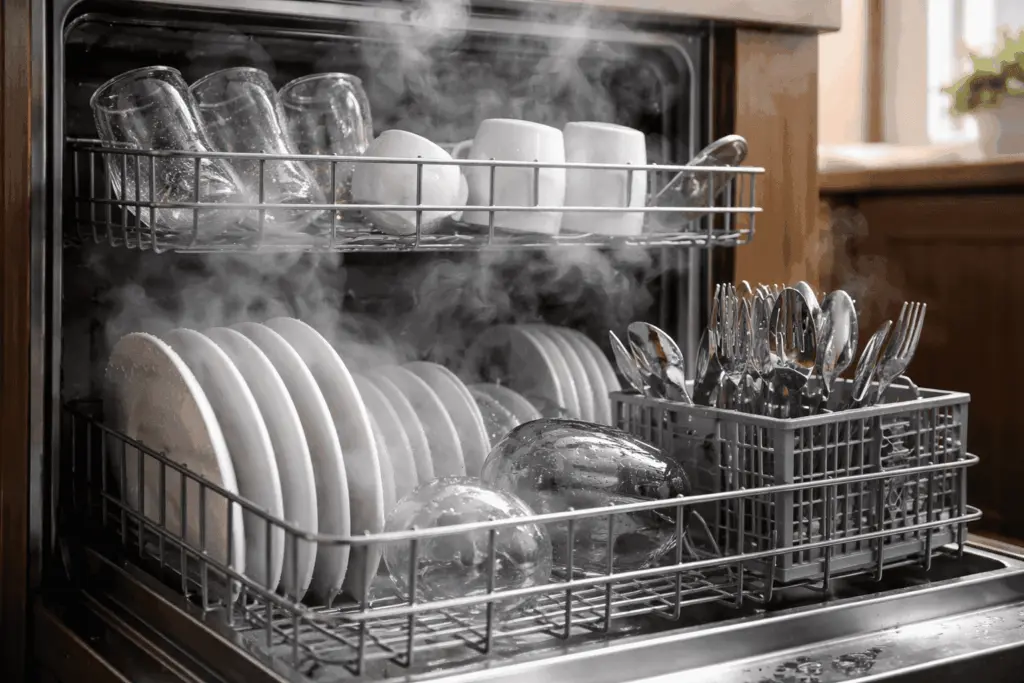
Hard water and dishwasher maintenance in the Sacramento area
Water hardness differs between neighborhoods and cities in the Sacramento region, depending on whether the supply is river water or groundwater. Your water utility publishes a yearly water-quality report, and it lists hardness. Where the water is harder, you will see white scale on glasses, the tub and the heating element, and the spray arm holes clog sooner.
The dishwasher maintenance fix is simple. Use rinse aid, use a detergent that suits your water, run the monthly cleaning cycle, and descale if you see crust. If you notice scale everywhere in the house, our article on Sacramento heat and hard water covers more of the same issue for other appliances. A dishwasher not drying and cloudy glass often have the same root in rinse aid and scale. See our page on a dishwasher not drying for that.
Seasonal care and ways to extend the life of the machine
Dishwasher maintenance changes a little with the season, so do a bit extra when the weather calls for it. Before a long trip, empty the machine, run it once, then leave the door ajar. In summer heat, keep the kitchen ventilated, because a hot, humid cabinet encourages mold around the gasket. In winter, if a dishwasher sits in an unheated space, check the hoses for damage before you run it after a freeze.
A few dishwasher maintenance habits stretch the machine’s life. Load it so the arms spin freely. Use the right detergent amount, since too much leaves film and too little leaves grit. Keep the racks free of rust by replacing chipped coating. Check the supply line and the area under the sink twice a year for damp spots. Do not run a dishwasher that is rattling, leaking or making a grinding noise.
Think of dishwasher maintenance as a small monthly habit that avoids a bigger repair, much like an oil change. A ten-minute routine on the first of the month is easier to keep than a big yearly clean. Our page on dishwasher repair shows the problems it helps avoid.
Stop and call us if you see this
Stop your dishwasher maintenance and call if you find water near the wiring, a breaker that trips, a cracked tub, a cloudy chemical smell that persists after cleaning, or a pump that grinds when you run a short cycle. Switch off the breaker before reaching into the bottom of the tub, and never remove the lower panel with the power on.
Do not mix cleaning products, never run two cleaners in the same cycle, do not use steel wool on the tub, and do not bypass any door switch or safety device.
We service dishwashers in West Sacramento, Sacramento, Davis, Woodland and nearby, for homeowners, landlords and property managers. Our technician comes in a marked vehicle, offers shoe covers, and carries the tools, schematics and common parts for the job. For information on how efficient machines use less water, see ENERGY STAR’s dishwasher page.
If your dishwasher maintenance does not clear a smell or a performance problem, book a visit and we will take a look. The service call is $80.
Common questions
How often should I clean the dishwasher filter?
Once a month works for most households, and more often if you cook heavily or skip scraping plates. If the machine smells or dishes come out gritty, check the filter first before trying anything else.
Is it safe to run vinegar in the dishwasher?
Occasionally, yes, on its own in an empty machine. Never mix it with bleach or detergent, and avoid weekly use because it can dry out rubber seals. Check the manual, since some makers prefer a citric-acid cleaner.
Why do my glasses look cloudy?
Cloudy film is usually mineral scale from hard water or too much detergent. Add rinse aid, adjust the detergent amount, and run a descaling cycle. If it does not clear, the film may be etching, which is permanent.
Related guides
Dishwasher Leaking? 7 Places to Check and Fix
A leaking dishwasher usually comes from one of seven spots. The dry-towel test tells you which one, and a few signs tell you when…
Dishwasher Not Working? 6 Signs You Need Repair
Not starting, not draining, not cleaning or too loud: here are the home tests for each, and six clear signs that it is time…

Dishwasher Installation: 7 Steps and Warning Signs
A good dishwasher installation comes down to power, water in, water out and a level tub. Here are the seven steps and the signs…