Power Surge Appliance Damage: 5 Ways to Protect

Power surges are short spikes of voltage that slip into your wiring, and the modern appliance is more exposed to them than the old one. A refrigerator, washer or oven today runs on a control board, and a board is cheap to cook with a spike. This article names the appliances most at risk, lists the warning signs, and gives five ways to protect them in a West Sacramento or Sacramento home.
Table of Contents
It is general advice. A qualified electrician should handle any work at the breaker panel, and you should never open an appliance that is plugged in.
Where power surges come from
People think of lightning, and that is one source. The consumer-safety site Safe Electricity lists nearby lightning strikes and storms, and damaged power lines or poles, as causes from outside the house. It also says surges are created inside the house by motors that switch on and off, such as refrigerators, freezers, dishwashers and vacuums. Surges can arrive through power, phone or cable lines.
Small surges are routine, and the damage can build up over time. A board that has been hit many times may fail on an ordinary day, which is why a failure can look random. Sorting out the cause of a failure after power surges is hard even for a technician, so do not blame yourself if you cannot tell.
Which appliances suffer most from power surges
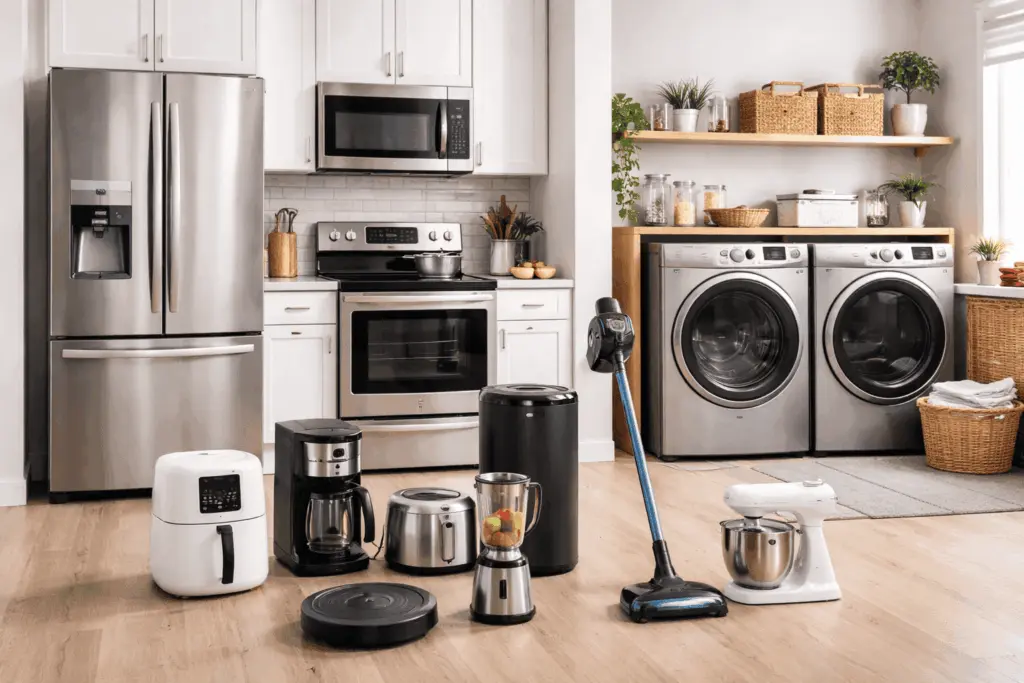
Any appliance with a display, a board or a sensor is at risk. The usual victims are:
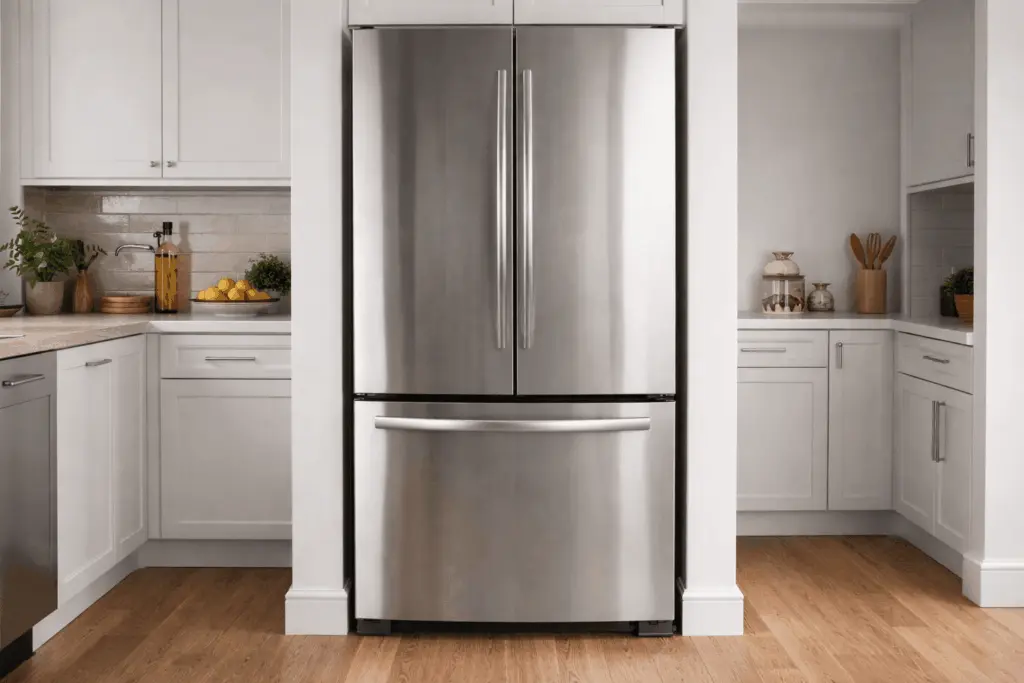
- Refrigerators and freezers. The main board and the compressor start components can fail, and food loss is the hidden cost.
- Washers and dryers. Control boards and motor drive boards take the hit.
- Ovens, ranges and microwaves. Touch panels and clock boards are the weak point.
- Dishwashers. Boards and the water valve control can go.
Older appliances with dials and mechanical timers are tougher, which is a small irony of progress. The more electronics an appliance has, the more it needs protection from power surges, and a smart or touch-panel model needs it most.
Signs that power surges hit your appliance
A surge rarely leaves a mark you can see. Watch for these after a storm, an outage or a flicker:
- A dead display, or a display that shows odd symbols.
- Buttons that do not respond, or a unit that beeps on its own.
- An appliance that is running but not doing its job, such as a fridge that hums and stays warm.
- A tripped breaker that trips again as soon as you reset it.
- A burnt or plastic smell near the control panel.
If you see any of these, unplug the appliance or switch off its breaker. Do not keep trying to restart it, because that can turn a small fault into a larger one. Our refrigerator repair and washer repair pages describe what we look at.
Five ways to protect against power surges
- Add protection at the panel. Safe Electricity says a service-entrance device, installed at the home’s electrical service, helps protect larger appliances such as ranges, water heaters, washers, dryers and dishwashers. It should be installed by a qualified electrician or your utility, since a poor installation does little.
- Use plug-in protectors for electronics. Safe Electricity recommends point-of-use devices within about 15 feet of sensitive electronics. Keep large appliances on their own wall outlet unless their manual says otherwise.
- Unplug during storms and long outages. It is the one method that works against everything, including a direct hit.
- Wait before restarting after an outage. When power returns, give a refrigerator or freezer a few minutes before it starts, and let the supply settle. The return of power can come with a spike.
- Check and replace the protectors. A strip has a limited life. A failed indicator light, a buzzer or a unit that shuts off means it is spent.
No device blocks every spike, so the right answer is layers: protection at the panel, plug-in protectors for electronics, and common sense in a storm. You can read more at Safe Electricity’s surge protector guide.
Habits that reduce the damage from power surges
Beyond the five ways above, a few habits are free. Avoid plugging a refrigerator and a heavy-draw appliance into the same extension cord. Do not run an appliance with a frayed or warm cord. After a big storm, check the outlets for scorch marks before you reset anything. If the lights flicker a lot, tell your utility, because the problem may be on the street and not in your house.
It also helps to know where your breaker panel is and which breaker feeds each large appliance. In a surge event, you can switch off the circuit before the supply recovers, then bring each appliance back one at a time. That order spares the compressor in a refrigerator from several loads arriving together. Write the circuit names on the panel label if they are missing, and keep a note of the model numbers of the appliances you would most hate to lose, so you can report them quickly if something fails.
Whole-home protection versus a strip
A plug-in strip is cheap and easy, and it suits a television or a computer. It does very little for a hard-wired oven or a dryer with a heavy cord. A panel-mounted device protects every circuit in the house, but it needs an electrician and a free breaker slot. For most households, both have a place, each covering different power surges.
Wiring matters as much as the device. Loose or worn connections, an outlet that sparks or a breaker that runs warm raise the risk of damage even without a storm. If you notice any of that, ask an electrician to look.
What warranties and repairs cover after power surges
Do not assume a warranty will pay for damage from power surges. Many manufacturer warranties exclude damage from the electrical supply, so check the exact wording in your manual. A home warranty or homeowner’s insurance policy may respond differently, and each has its own conditions. We cannot tell you what your policy covers, and we give no warranty advice on yours.
If a board has failed after power surges, repair is often possible. Our technician checks the supply and the board before suggesting a part, and our service vehicles carry common parts, so many jobs finish on the same day. If the appliance is old, run the numbers with the repair or replace calculator, because a new board on a worn machine is not always good value.
If you think power surges have hurt an appliance in West Sacramento, Sacramento, Davis or Woodland, book a visit or call us. The service call is $80.
Common questions
Will my appliance warranty cover surge damage?
Often not. Many manufacturer warranties exclude damage from the electrical supply, such as a surge or lightning. Read the warranty in your manual, and ask whether a home-warranty or insurance policy covers appliance damage before you rely on it.
How can I tell if a surge damaged my appliance?
Look for a dead or scrambled display, buttons that do nothing, an appliance that runs but does not cool or heat, or a burnt smell near the control panel. Several of these appearing right after a storm or outage points to the electronics.
Is a plug-in surge strip enough for a refrigerator?
A strip helps with small electronics, but large appliances usually belong on their own wall outlet. Panel-level protection installed by an electrician covers the whole house, including the refrigerator, washer and range.
Related guides
Oven Repair Cost in West Sacramento: What Sets the Price
Nobody can name your oven repair cost before someone looks at the oven. Here is what moves the price up or down, and how…
Microwave Installation: Over-the-Range and Built-In
Setting a countertop microwave on the counter is easy. An over-the-range or built-in unit is a different job. Here is what the work involves…
Microwave Maintenance: 7 Tips for Longer Life
Most microwaves die from grease, misuse or a worn door, not old age. Seven small habits of microwave maintenance, plus a short checklist for…