Microwave Maintenance: 7 Tips for Longer Life
Microwave maintenance is one of the cheapest ways to keep a kitchen appliance running, and it takes about five minutes a week. A microwave rarely wears out from age alone. It fails because grease burns on the cavity wall, a door seal gets chipped, or someone runs it empty. This article gives seven habits that cover most of what goes wrong, plus a checklist for efficient use in a West Sacramento kitchen.
Table of Contents
Everything here stays on the outside of the oven. Never open the case of a microwave. The capacitor inside can hold a dangerous charge even when unplugged, and working on it is for technicians.
Seven microwave maintenance habits that pay off
Start with the first three, since cleaning is where most of the benefit comes from. The rest are about not putting stress on the oven. None needs tools, a trip to the store or a call to a technician.
- Wipe spills the same day. Cooked-on food absorbs energy and can scorch the cavity.
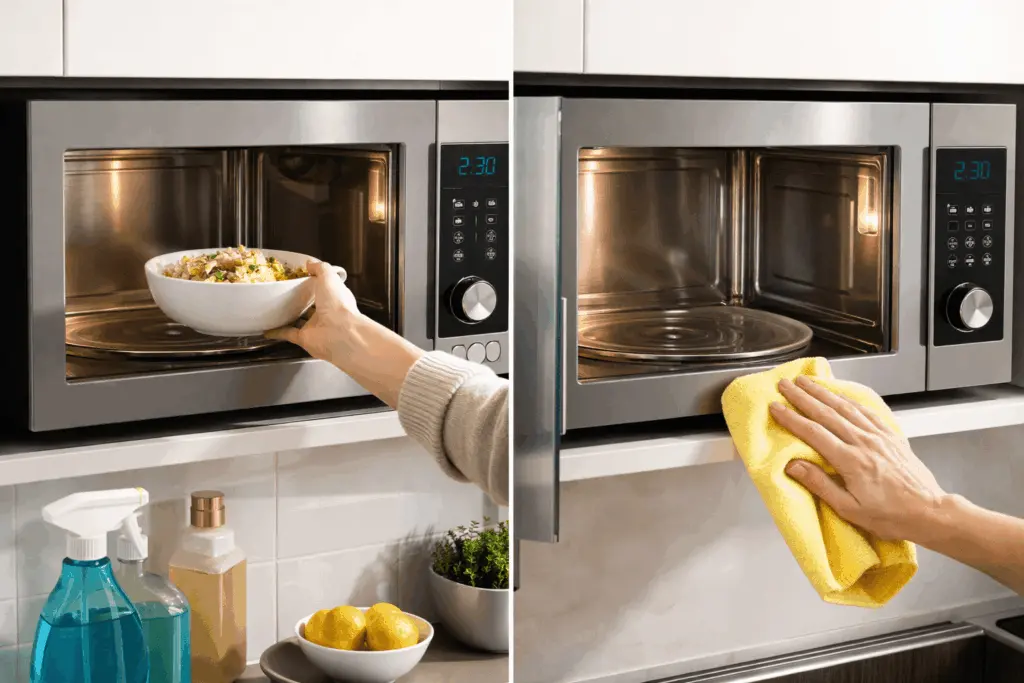
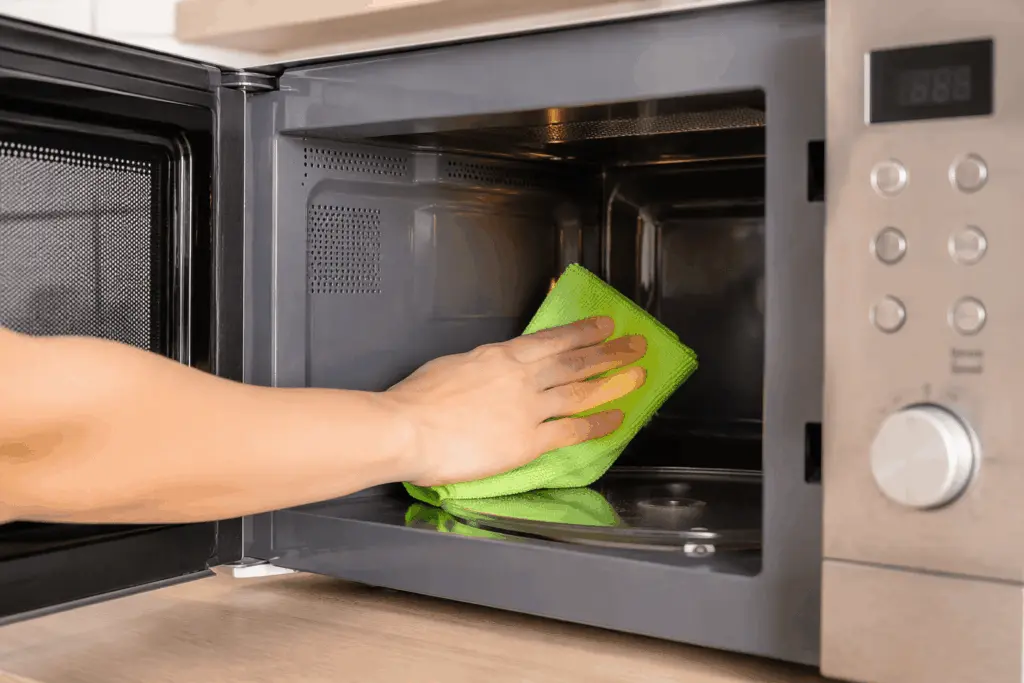
- Steam-clean weekly. Heat a bowl of water for two to three minutes, leave the door closed for a minute, then wipe the softened residue away.
- Clean the door edge and seal. This is the part people forget.
- Use microwave-safe cookware and cover food. Covering stops splatter before it starts.
- Never run it empty. Leave a cup of water in if you are testing.
- Lift out and wash the tray and roller ring. The turntable then rolls freely and stays quiet.
- Keep vents and filters clear. Over-the-range models have a grease filter that needs washing.
Keep a damp cloth near the microwave so the habit sticks. The rest of this page explains why each habit matters, so the microwave maintenance routine makes sense and does not feel like a chore.
Cleaning: what to use and what to avoid
The steam trick in habit two does most of the work. The water vapor loosens the residue so a damp cloth wipes it off without scrubbing. Add a spoonful of vinegar if there is an odor. Avoid steel wool and harsh abrasive cleaners, which scratch the lining and leave spots where food can bake on.
Microwave maintenance for the door seal and latch
The area around the door is where grime collects and where a chipped edge can matter. Wipe the door frame, the inner edge and the seal with a damp cloth every week. Look for cracks, warping, or a gap when the door is closed. The U.S. Environmental Protection Agency explains that microwave ovens use non-ionizing radiation, and advises against running one if the door is dented or broken. If the door does not close firmly, stop using it.
Over-the-range models need one more step. The grease filter under the unit catches cooking fumes from the stove below, and a clogged filter makes the fan work harder and can hold heat near the oven. Slide it out, soak it in hot soapy water, rinse and dry it before putting it back. Do the same with the charcoal filter if your model has one, though that type is usually replaced rather than washed. Check the manual for how often. For a unit above a busy range, microwave maintenance of the filter matters as much as cleaning the cavity.
Cookware and food habits
The wrong container is the other big cause of repairs. Metal pans, foil and dishes with gold or silver trim can spark. Some thin plastic tubs warp, and sealed containers can burst when steam cannot escape. Look for a microwave-safe label, vent the lid, and stir or turn the food halfway through so it heats evenly.
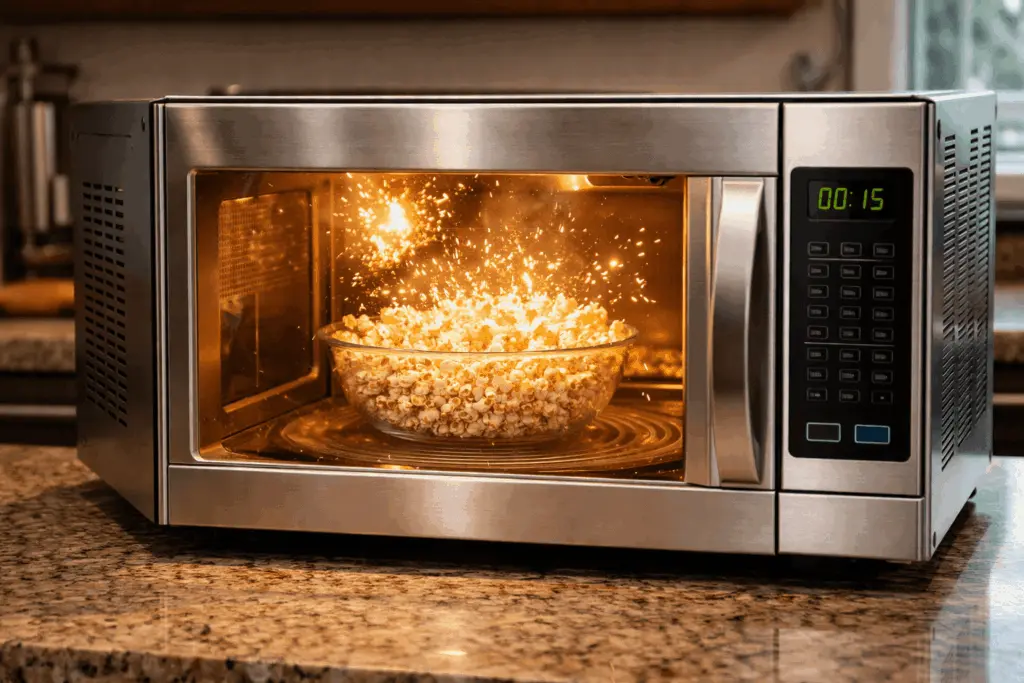
Some foods need extra care. Whole eggs in the shell, and sealed jars, can burst. A bag of popcorn belongs on the setting printed on the bag, not on a long guess that scorches both the popcorn and the cavity. Good microwave maintenance starts with what goes in.
Mistakes that shorten a microwave’s life
A few habits do quiet damage. Slamming the door wears the latch hooks and the switches behind them. Leaning on the open door bends the hinge. Running a mug of liquid for far too long can overheat it, and the liquid can erupt when you move it, so use short bursts and let it rest. Ignoring a burned patch lets it spread. Good microwave maintenance means treating the door gently, because that is the part most likely to fail first.
Efficient use checklist
The same habits that protect the oven also save a little electricity. Run through this list when you set the timer:
- Use the power level the food needs. High for everything is rough on the oven.
- Cover food, so steam does the work and the walls stay clean.
- Arrange food in a ring with a gap in the middle, thicker parts toward the outside.
- Reheat only what you will eat. Repeated reheating wastes energy and dries food out.
- Stand the dish on the turntable, not off to one side where it misses the beam pattern.
- Do not stack containers or overfill the cavity.
None of these steps is complicated, but together they make microwave maintenance part of how you cook.
Signs that maintenance is no longer enough
A microwave that has been looked after still wears out eventually. These signs mean it is time to stop and call:
- Sparks when the cavity is empty and clean.
- A burning smell that is not food.
- A door that does not close, sags, or opens on its own.
- Food that stays cold while the light and fan run.
- A loud buzz or grinding that is new.
Our microwave not working article goes through those symptoms one by one. If you would like a technician to look at it, our microwave repair page explains what we handle, and we work on countertop, over-the-range and built-in models from the major brands.
Weigh the cost before you repair an older, inexpensive unit. The repair or replace calculator helps you decide once you have a quote. Regular microwave maintenance usually postpones that decision for years.

A simple weekly microwave maintenance routine
Put it on a calendar if that helps. Once a week, steam the cavity, wipe the door seal and edge, and rinse the tray. Once a month, check the cord and plug for damage, and on an over-the-range model, wash the grease filter in warm soapy water. Twice a year, look at the roller ring and the coupler for wear. That is the whole microwave maintenance plan.
Microwave maintenance cannot fix a failed part, but it makes failures rarer and easier to diagnose. If yours in West Sacramento, Sacramento, Davis or Woodland starts acting up, book a visit or call us. The service call is $80.
Common questions
How often should I clean the inside of a microwave?
Wipe up spills the same day and give the inside a proper clean about once a week if you use it daily. Food that is baked on by repeated cycles is what burns and eventually damages the cavity lining.
Is it bad to run a microwave empty?
Yes. With nothing to absorb the energy, it reflects back and can damage the magnetron. If you are unsure whether it is running, put a cup of water inside. It is a cheap habit that protects an expensive part.
Can I clean behind the control panel or inside the case?
No. Stay on the surfaces you can reach: cavity, door, seal, tray and the outside. The inside of the case holds a high-voltage capacitor that can stay charged after unplugging, so that is technician territory.
Related guides
Microwave Installation: Over-the-Range and Built-In
Setting a countertop microwave on the counter is easy. An over-the-range or built-in unit is a different job. Here is what the work involves…
Microwave Not Working? 6 Problems and When to Call
A microwave not working usually falls into one of six patterns. Here is what you can safely check, what points to a failed part,…
Oven Repair Cost in West Sacramento: What Sets the Price
Nobody can name your oven repair cost before someone looks at the oven. Here is what moves the price up or down, and how…