Microwave Not Working? 6 Problems and When to Call
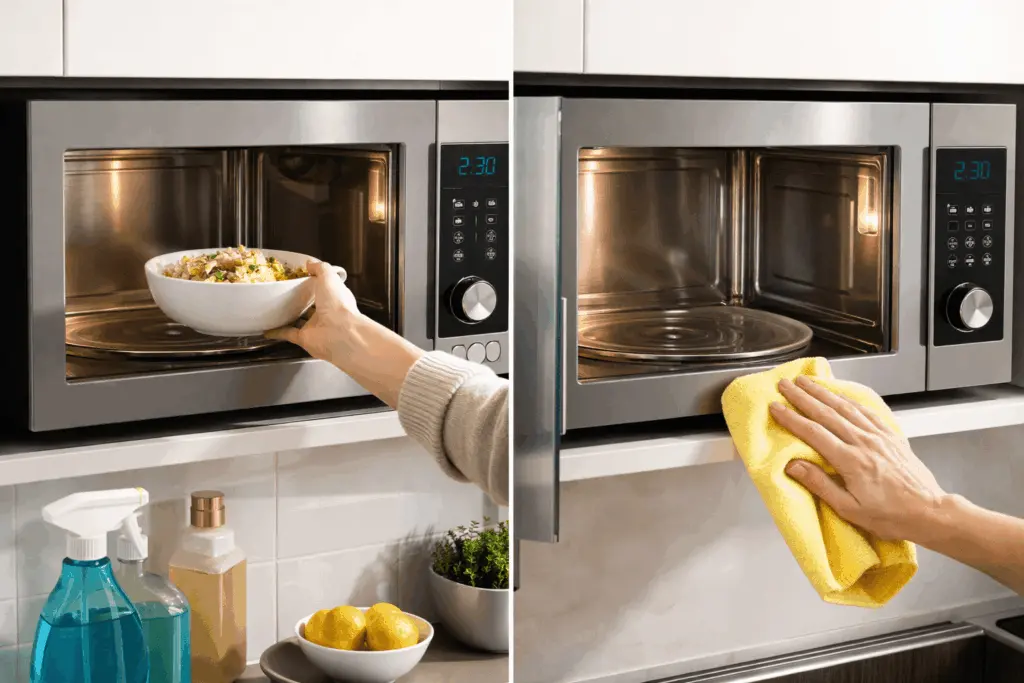
A microwave not working can mean six very different things, and only some of them are worth a service call. This guide goes through the six problems in the order people notice them, shows the safe checks you can do in a few minutes, and marks the point where you should unplug the unit and book a technician in West Sacramento or Sacramento.
Table of Contents
One rule first. Never open the case of a microwave. The high-voltage capacitor inside can hold a dangerous charge after the plug is pulled, and that part is for technicians only. Everything below stays on the outside.
Six reasons for a microwave not working
- It runs but does not heat.
- It sparks or arcs.
- The turntable does not turn.
- It makes a loud or new noise.
- The door will not latch or open.
- It is dead, with no display and no light.
Each one has its own cause and its own answer. The first, second and fourth point inside the case, the others are mostly on the outside. Find your pattern before you read further, because a microwave not working for one reason needs a different response than for another.
Five-minute checks for a microwave not working
Do these before you decide that a microwave not working needs a repair. They take no tools and carry no risk if you stay outside the case.
- Plug a lamp into the same outlet. If the lamp is dark, the problem is the outlet or breaker, not the microwave.
- Look for a tripped breaker or a GFCI button on a nearby outlet, a common cause in kitchens.
- Check that the child lock is off and the power level is not set low.
- Close the door firmly and listen for the click.
- Run a cup of water for one minute and feel whether it is warm.
If none of these changes anything, the microwave is not working because of a part, and the sections below help you tell which.
Electrical problems: no heat, sparks and noise
1. It runs but food stays cold
If the light, fan and turntable work but the food stays cold, the heating circuit has failed. The usual suspects are the high-voltage diode, the capacitor, the magnetron, or a door switch that thinks the door is open. All of these sit behind the case, so this is a call, not a project. A cup of water that warms only a little means weak heating rather than none, which is useful information for our technician.
2. Sparks or arcing in a microwave not working
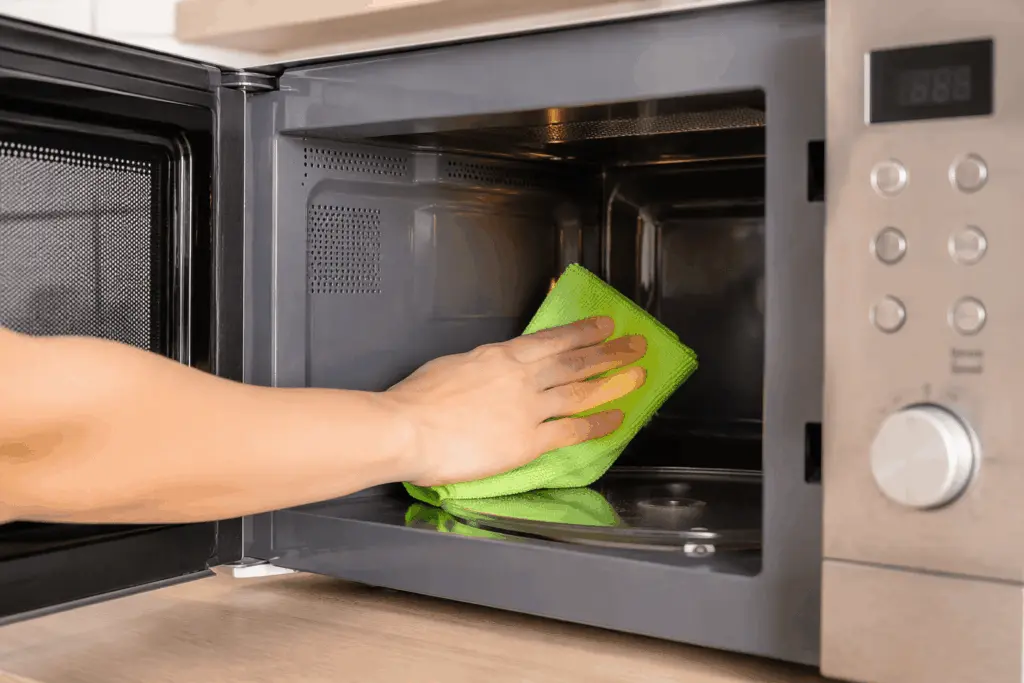
Sparks come from metal, foil, gold or silver trim on dishes, or a burned patch inside the oven. A small square cover on the right wall, called the waveguide cover, can soak up grease and burn. Stop the cycle, unplug the microwave and let it cool. Wipe the cavity clean and look at the cover for brown scorching or a hole.
If it still sparks when empty and clean, the damage is deeper and the oven needs service or replacement. The U.S. Food and Drug Administration’s microwave oven guidance also says to keep metal out and to stop using an oven with a damaged door.
4. New or loud noises
A low hum is normal. A loud buzz, a grind or a rattle is not. The common culprits are a loose roller ring, a failing turntable motor, the cooling fan touching something, or a magnetron that is wearing out. Stop the microwave if the noise is sharp, if you smell burning, or if the buzz is much louder than when it was new.
Outside problems: turntable, door and power
3. The turntable has stopped turning
This is the friendliest fault on the list. Lift the glass tray and look underneath. The roller ring should sit in its track, the coupler in the center should be clean, and nothing should be stuck in the groove. Reseat them, put the tray back and test. If the tray still does not turn, the small motor under the floor is probably tired. Food heats unevenly, but the microwave is usually safe to run until it is repaired.
It helps to keep the two cases apart. A stalled tray is annoying, while a microwave not working at all, with a dead heating circuit, is a repair job.
5. The door will not latch or open
The door has hooks and switches that tell the oven it is closed. If the door sags, does not click or pops open, those parts may be worn. Never tape the door shut or force the switch. A microwave that runs with a door that does not close is a hazard, and the FDA advises stopping use and contacting the manufacturer or a repairer if the door is damaged. If a stuck door is the reason for the microwave not working, unplug it for a minute and try the release again. If it still will not open, leave it alone.
6. Dead display and a microwave not working at all
Run the outlet and breaker checks above and feel the cord for damage. Built-in and over-the-range models sometimes have a separate fuse or a plug hidden in the cabinet above. If the outlet is live and the microwave is still dead, the internal fuse or the control board is the next suspect, and that is for a technician.
What our technician checks when a microwave is not working
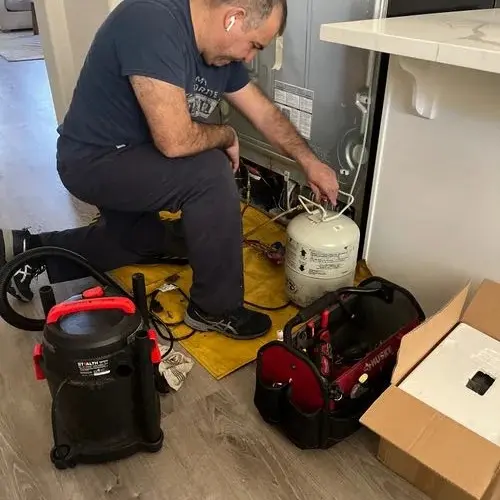
With the microwave unplugged and the capacitor safely discharged, a technician tests the door switches, the fuse, the diode, the capacitor and the magnetron with a meter, one at a time, rather than swapping parts and hoping. That order is what keeps a repair short. Our service vehicles carry many of the common parts, so a microwave not working for a standard reason can often be fixed on the day of the visit.
Tell us the brand, the model number from the label inside the door, and exactly what it does. A clear description of a microwave not working, such as “lights on, fan on, cold food”, saves time.
Repair or replace a microwave that stopped working
A countertop microwave is inexpensive, and a repair can come close to the price of a new one. Built-in and over-the-range models are a different story, since they are fitted into cabinets and replacing them means more work. Our repair or replace calculator helps you compare once you have a quote, and our microwave repair page lists what we service.
If you do replace a built-in unit, fitting is its own job, covered in our microwave installation guide. To avoid a repeat, our microwave maintenance tips cover cleaning and cookware. A microwave not working because of burned food residue is the most avoidable repair of all.
Whatever the cause, a microwave not working is never worth a risk. Keep to the outside checks, unplug it, and let a technician deal with the inside. Book a visit or call us, and our technician will look at it in your home. The service call is $80.
Common questions
Why does my microwave run but not heat?
The light, fan and turntable run on a different path from the heating system. When the food stays cold, the fault is inside the high-voltage section: diode, capacitor, magnetron or a safety switch. Those need a technician.
Is it dangerous to use a microwave that sparks?
Stop the cycle at once and unplug it. Sparks come from metal, foil, gold-rimmed plates, or a burned spot inside the oven. If it still sparks when empty and clean, do not use it again until it is looked at.
Can I open the cabinet and test the parts myself?
No. A microwave capacitor can hold a dangerous charge even when unplugged. Opening the case is for technicians. Limit yourself to outside checks: outlet, breaker, door, turntable and settings.
Related guides
Microwave Installation: Over-the-Range and Built-In
Setting a countertop microwave on the counter is easy. An over-the-range or built-in unit is a different job. Here is what the work involves…
Microwave Maintenance: 7 Tips for Longer Life
Most microwaves die from grease, misuse or a worn door, not old age. Seven small habits of microwave maintenance, plus a short checklist for…
Oven Repair Cost in West Sacramento: What Sets the Price
Nobody can name your oven repair cost before someone looks at the oven. Here is what moves the price up or down, and how…