Appliance Disposal in West Sacramento: 6 Safe Options
Appliance disposal in West Sacramento is easier than most people expect, but only if you pick the right route for the machine. A washer, a stove and a refrigerator are not handled the same way, and a refrigerator in particular must not be dumped or scrapped as it is. This article lists six safe options, based on the City of West Sacramento’s recycling page and other sources named below, plus what to prepare before anyone arrives.
Table of Contents
Programs and limits change, so confirm the details of any appliance disposal service when you book. We have only included what we could check, and we have named where each fact comes from.
Six safe options for appliance disposal
- City bulky waste pickup. The City of West Sacramento’s A-Z recycling page says residents can schedule bulky waste pickups through Waste Management. It lists two appointments per year, counted from July 1 to June 30, and says residents who use both can ask Environmental Services about a landfill voucher, with restrictions.
- Retailer haul-away. ENERGY STAR notes that many retailers will pick up and recycle your old refrigerator when you buy a new one. Ask the store before you buy, since terms differ.
- Metal recycler. The same city page lists a local metal recycler for appliances, but says it does not accept appliances that still contain freon or other liquids. That rules out a refrigerator or freezer unless the refrigerant has been removed first.
- Your own city or county program. If you live in Sacramento, SMUD’s page says its refrigerator recycling program has ended and points customers to the City of Sacramento, Elk Grove or Sacramento County for no-cost pickup. Check those sites for today’s rules.
- Donation or resale. A working appliance often finds a home. Be honest about its age and condition.
- Private haulers. Paid junk and appliance haulers operate in the area. Prices and terms were not verifiable, so ask for the price and ask where the appliance goes before you book.
Before you choose, decide whether the appliance is truly finished. Our repair or replace calculator is a quick check, and our repair or replace rules go further.
Refrigerant rules and why they matter for appliance disposal
A refrigerator, freezer, air conditioner or dehumidifier contains refrigerant, and a refrigerator may also hold insulating foam with chemicals in it. Federal law bars releasing refrigerant into the air, which is why scrap yards turn away units that have not been drained. ENERGY STAR says that recycling an old refrigerator properly keeps refrigerants and foam out of the environment.
What this means for your appliance disposal plan
Never cut a line, remove a part from the sealed system or puncture the coil to make a fridge easier to carry. That work, like all sealed-system repair, is for technicians. For appliance disposal, choose a route that states it handles refrigerators. Keep the doors in place until it is collected, but make sure they cannot lock a child in.

What to prepare before pickup
A little preparation prevents the most common problems on the day.
- Refrigerators and freezers: unplug, empty, defrost for a day, and dry the inside so it does not leak or smell.
- Washers: drain the hoses, and tie them and the cord so they do not drag.
- Dryers: unplug and empty the lint trap.
- Gas appliances: the gas line should be disconnected and capped by a qualified person. Never do that yourself, and if you smell gas, leave and call the gas utility.
- All appliances: clear the path, measure the doorway, and take out loose racks, glass and food.
Most appliance disposal appointments ask you to place items where the crew can reach them. Read the instructions for the specific service you book.
Appliance disposal by type of appliance
The route that suits one machine may not suit another, so match the option to what you have.
- Refrigerators and freezers: use a pickup or haul-away that names refrigerators, such as the city bulky service or a retailer takeback. A scrap yard will not take it with the refrigerant still in.
- Washers and dryers: these are mostly steel and are usually accepted as bulky items or by a metal recycler, once the water is drained.
- Ranges, ovens and dishwashers: also steel-heavy. Gas units need the gas line capped first, by a pro.
- Microwaves: smaller, but they still contain a capacitor, so do not open one. Ask the pickup service whether it takes them or points you to an electronics drop-off.
In every case the point of appliance disposal is the same: the metal gets recycled, the refrigerant is recovered, and nothing ends up dumped beside a canal or a vacant lot. Dumping an old fridge is illegal as well as harmful, so take the extra step to book a pickup.

Costs and what to ask
We cannot quote costs for the services above, so we will not guess. Ask each of these questions before you commit:
- Is there a charge, or is the pickup part of a city allotment?
- Do you take refrigerators, and what happens to the refrigerant?
- Do you take the appliance from inside the house or only from the curb?
- When is the pickup window, and who confirms it?
If you are replacing the machine, ask the seller about haul-away at the same time you ask about delivery. A new unit that needs fitting is a good moment to have the old one taken away, and our appliance installation service can connect the new appliance once the old one has gone.
How repair supports sustainability
The greenest appliance is the one that keeps working. A large share of the environmental cost of any appliance goes into making and shipping it, so extending its life with a repair has a real benefit. A blown fuse, a worn belt or a failed igniter is often a fix measured in hours rather than a reason for appliance disposal.
That does not mean every old machine should be saved, and sometimes appliance disposal is the right call. A refrigerator that is well past its prime may waste electricity, and ENERGY STAR says refrigerators over 15 years old may cost noticeably more to run. If you have a fridge that is struggling, our refrigerator repair page explains what we look at before you decide.
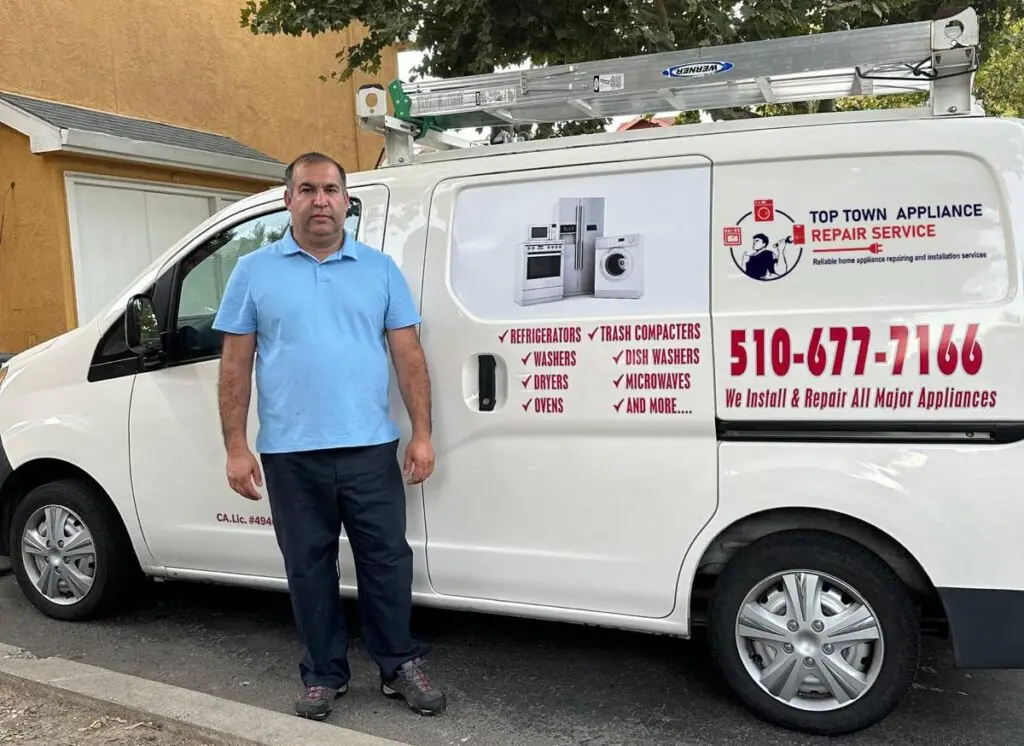
When a repair makes sense, our technician can often complete it the same day, since the service vehicles carry common parts. When it does not, the six options above give you a safe route out. Whichever you pick, appliance disposal is only as good as the route behind it, so choose one that recycles.
If you are not sure whether to repair or let go of an appliance in West Sacramento, Sacramento or Davis, book a visit or call us, and our technician will take a look. The service call is $80.
Common questions
Can I put an old refrigerator on the curb?
Not as ordinary trash. A refrigerator holds refrigerant that must be recovered by a qualified person, and a metal recycler will not take units that still contain it. Schedule a bulky pickup or a haul-away that handles refrigerators.
Will the city take away a washer or stove?
West Sacramento's A-Z recycling page says residents can schedule bulky waste pickups through Waste Management, with a set number of appointments each year. Check the page for what is accepted and book before you move the appliance.
Is it better to repair than dispose of an old appliance?
If the appliance is otherwise sound, a repair keeps it out of the landfill and spares you a new purchase. If it has failed repeatedly, is old, or costs more to fix than it is worth, replacing it may make sense.
Related guides

Power Surge Appliance Damage: 5 Ways to Protect
Power surges rarely announce themselves. Here is which appliances suffer most, the signs of damage, and five ways to protect them, from a plug-in…
Smart Appliance Repair: 5 Issues You Cannot Fix Alone
A connected fridge or washer fails in ways the old ones never did. Five problems that need a technician, what you can safely try…
Hard Water and Heat: 6 Ways the Valley Hurts Appliances
Scale from minerals and weeks of triple-digit heat both shorten the life of home appliances. Here is what is true for our area, what…