Oven Not Heating? 8 Causes for Gas and Electric
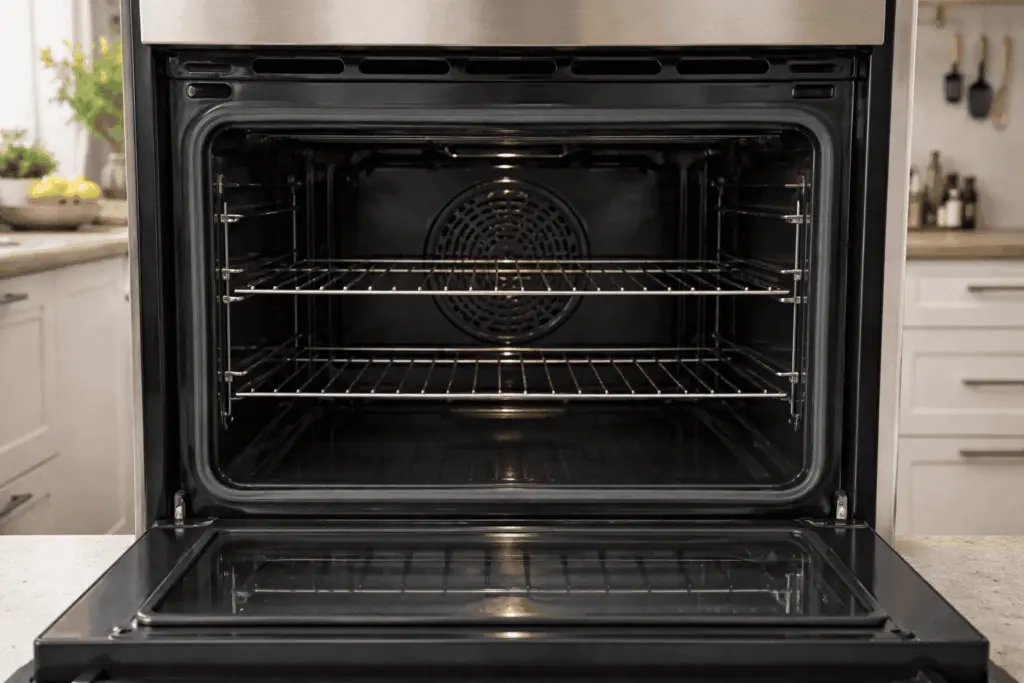
An oven not heating can mean three different things: no heat at all, heat that is far too low, or heat that takes forever to arrive. Each points to a different part, and the first thing that separates them is whether your range is gas or electric.
Table of Contents
Spend two minutes sorting your oven not heating problem before you start unscrewing anything. It also tells you what to say to a technician, which makes the visit shorter.
Sort an oven not heating by fuel and symptom
Set the oven to 350 degrees and wait ten minutes. An electric oven should show the bottom bake element glowing orange. If it stays dark, the element, its relay or the control is suspect. A gas oven should light the burner within about a minute or two of the igniter glowing, and you should hear a soft whoosh. If the igniter glows and no flame appears, the igniter is probably too weak to open the valve.
Next, try the broiler, the stovetop burners and the clock. If the broiler works but the bake side does not, the issue is limited to the bake system. If the whole range is dead, think power or a control board. If the cooktop burners light and the oven does not, the oven’s own parts are the cause.
8 causes of an oven not heating, with the checks
- Tripped breaker or a half-dead circuit (electric). A 240-volt range uses a double breaker. If one half trips, the clock and light may stay on while the elements stay cold. Switch the breaker fully off and then on once.
- Failed bake element (electric). Look for blisters, breaks or a burn spot. A broken element is a common cause of an oven not heating.
- Weak or failed igniter (gas). The igniter must draw enough current to open the gas valve. A worn one glows orange but never reaches that point.
- Faulty temperature sensor. The thin probe at the back of the oven tells the control the temperature. If it reads wrong, the oven may not heat or may shut off early.
- Control board or relay failure. The board switches power to the element or the gas valve. Burn marks or a dead display suggest it.
- Gas supply or safety valve trouble (gas). If other gas appliances run, the house supply is fine, and the oven safety valve may have failed. Never adjust the supply valve or gas line yourself.
- Selector, thermostat or door-lock problem. After a self-clean cycle, a stuck door lock or a worn thermostat can stop heat.
- A setting, not a fault. Sabbath mode, demo mode, a timer set to “delay start” or a wrong mode (such as warm) can look like a failure.
A safe test for an oven not heating on the electric side
With the oven off and the breaker off, you can look at the element’s condition and make sure the wires are not scorched. Do not touch the terminals while the circuit is live. Measuring an element’s continuity and the sensor’s resistance (it should read roughly a thousand ohms at room temperature on many models) is a meter job, so leave it to a technician.
The bake element is the part most people replace on their own when they have an oven not heating. It plugs in or screws in at the back of the oven. If you do this yourself, switch off the breaker first, pull the element forward gently, and take a photo of the wires before disconnecting anything. If the terminals look melted, stop.
Slow preheat: an oven not heating fast enough
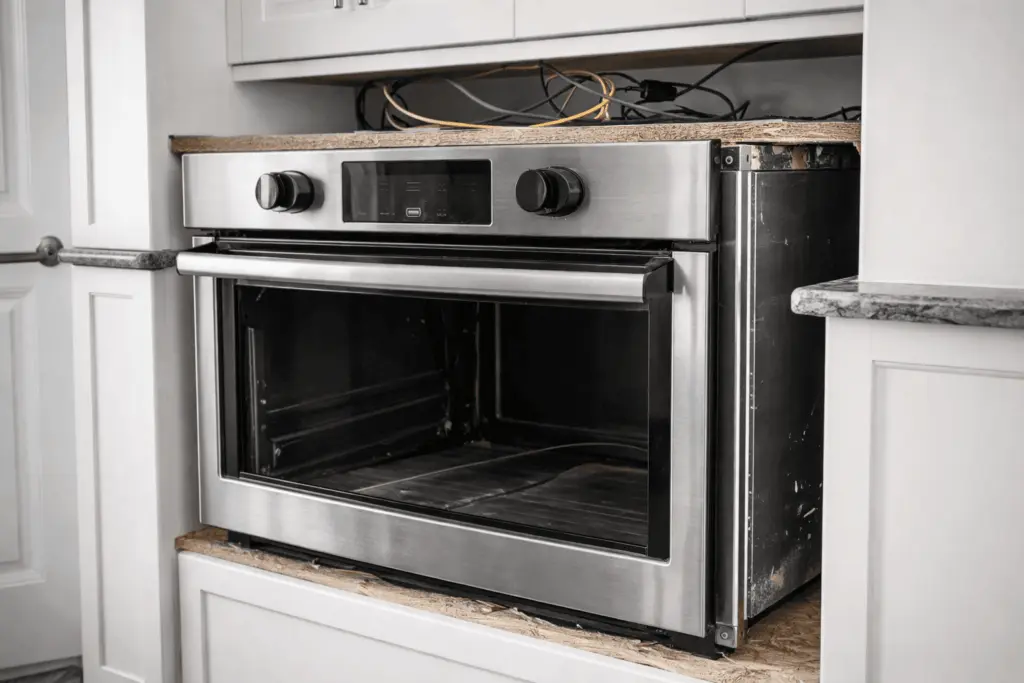
If the oven reaches temperature but takes much longer than it used to, this oven not heating quickly enough usually has a mild cause: the bake element may be weak, the door gasket may be leaking heat, or the temperature sensor may be reading wrong. A broiler that works fine and a bake that is slow often means a failing bake element or a cracked igniter that still sparks to life. Compare the oven’s reading with an oven thermometer placed on the middle rack: a gap of 25 degrees or more is worth a visit, and a gap that keeps growing is a sign of a failing sensor.
Wear in the door gasket can cause the same. Check it for gaps or flattened sections. Our page on oven maintenance covers gasket checks and calibration tests.
Gas safety rules for an oven not heating
If you smell gas, do not light anything, do not touch a switch and do not run the oven. Leave the house and call your gas utility from outside. Do not relight a pilot or work on the gas valve or pipe. A gas oven not heating because it clicks and does not light should be turned off, and the room ventilated while you wait.
If the oven is gas and the igniter glows but there is no flame, do not keep cycling it on and off. Turn it off and call. The NFPA publishes cooking safety guidance that is useful whenever an oven is acting up.
Range burner failures that look like an oven not heating
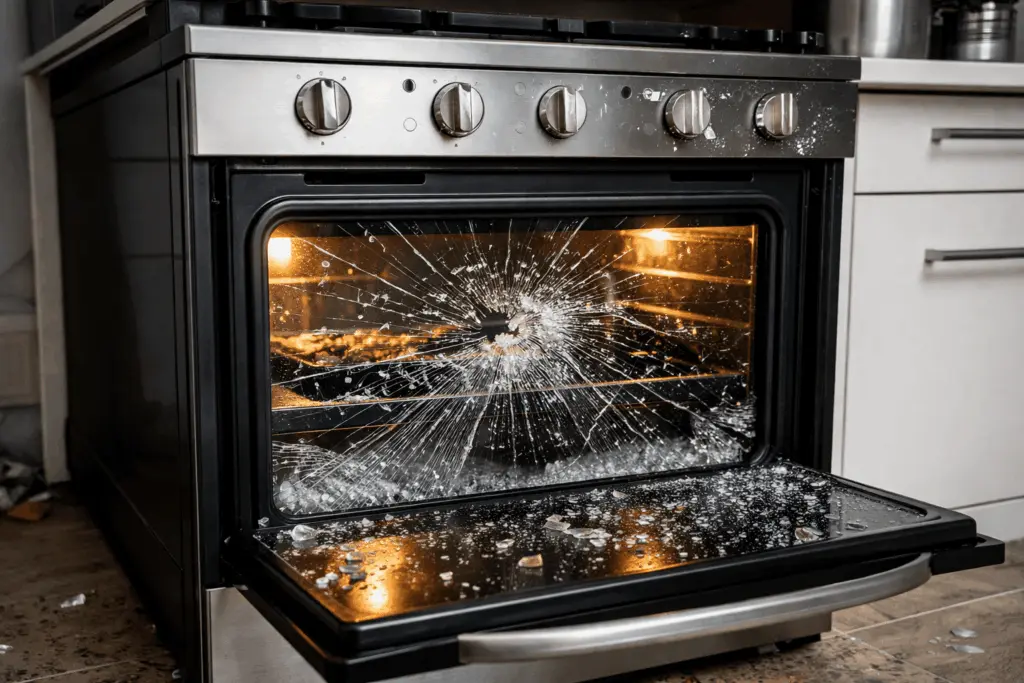
On a range, the stovetop and the oven share a power feed and, on gas models, a supply line. If the surface burners also fail to light, the cause may be the range’s incoming power or gas, rather than an oven part. If only one burner is dead, check its cap and the ports for spills. Clicking that goes on after a burner is lit means the igniter is wet or dirty.
Stop and call us if you notice this
With an oven not heating, stop using it and book a repair if you smell gas, see sparks or scorching at the element terminals, find that the breaker trips again, or see smoke that does not clear. Also stop if the oven door will not unlock after a self-clean cycle, since forcing a lock can damage it.
On an oven not heating, never bypass a thermostat, a high-limit device or a safety valve to get heat. Do not use the oven door open as a heater, and never use it to heat the room.
We service gas and electric ovens and ranges for homeowners, landlords and property managers in West Sacramento, Sacramento, Davis, Woodland, Dixon and the other towns we serve. Our technician arrives in a marked vehicle, offers shoe covers, and brings the tools, schematics and common parts, so many repairs are finished on the day of the visit. Details are on our oven repair page, and you can try the appliance diagnosis tool first. For related warning signs, read about oven repair signs.
If your oven not heating problem is still there after the checks above, book a visit and tell us whether it is gas or electric. The service call is $80.
Common questions
Why does my gas oven glow but not light?
The igniter has to draw enough current to open the gas valve. A worn igniter glows orange yet stays too weak, so no gas flows. Turn the oven off and have it replaced rather than cycling it repeatedly.
Why does my electric oven heat to the broiler but not bake?
The broil element and bake element are separate. A broken bake element, a failed relay or a faulty sensor can leave only the broiler working. A visible blister or break on the bottom element is a quick clue.
Is a slow-heating oven a safety problem?
Usually it is a wear issue, such as a weak element, a gasket leak or a sensor reading wrong. It becomes a safety problem if you smell gas, see sparks, or find scorching around terminals.
Related guides
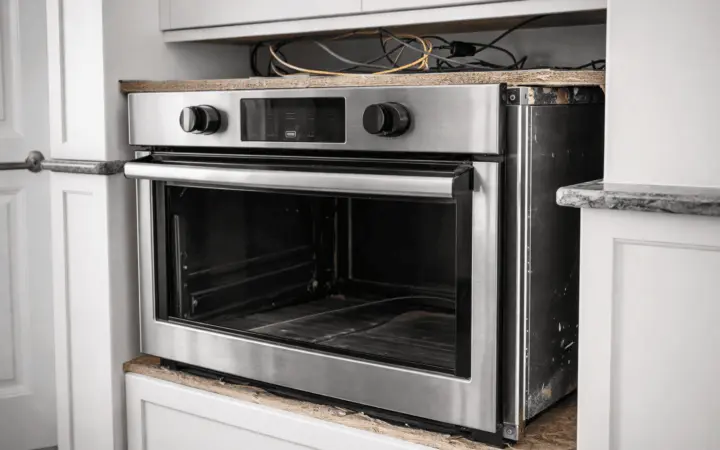
Oven Repair Cost in West Sacramento: What Sets the Price
Nobody can name your oven repair cost before someone looks at the oven. Here is what moves the price up or down, and how…
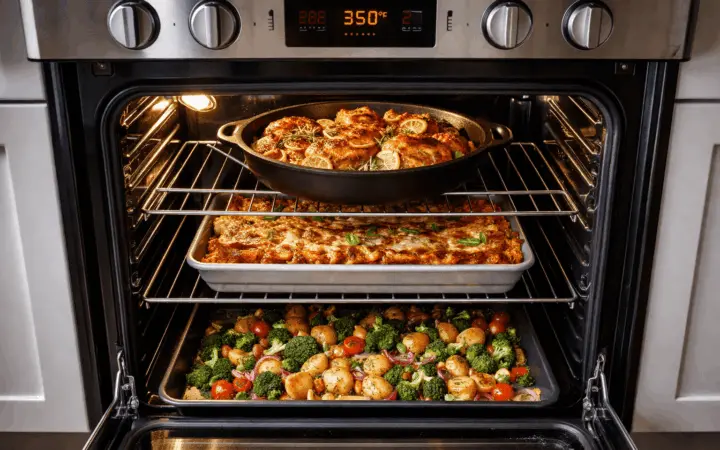
Oven Maintenance: 7 Tips to Keep It Running
Seven simple oven maintenance habits, from self-clean cautions to a calibration test, plus a quarterly checklist you can copy.
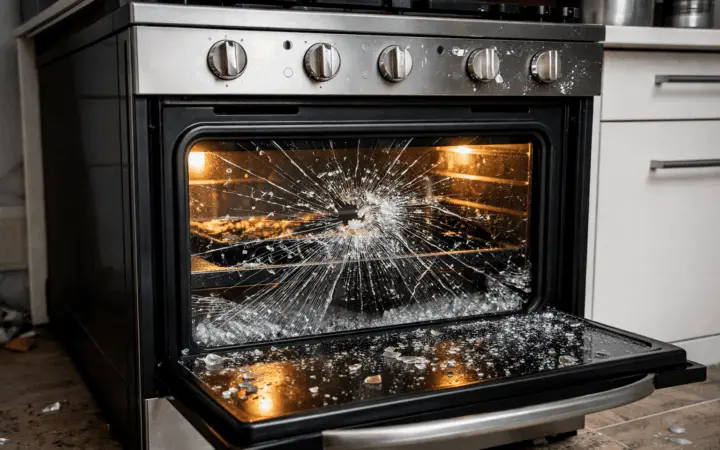
5 Oven Repair Signs and When to Call for Help
Uneven baking can wait; sparks and a gas smell cannot. These five oven repair signs show you which is which, with a simple temperature…