Oven Maintenance: 7 Tips to Keep It Running
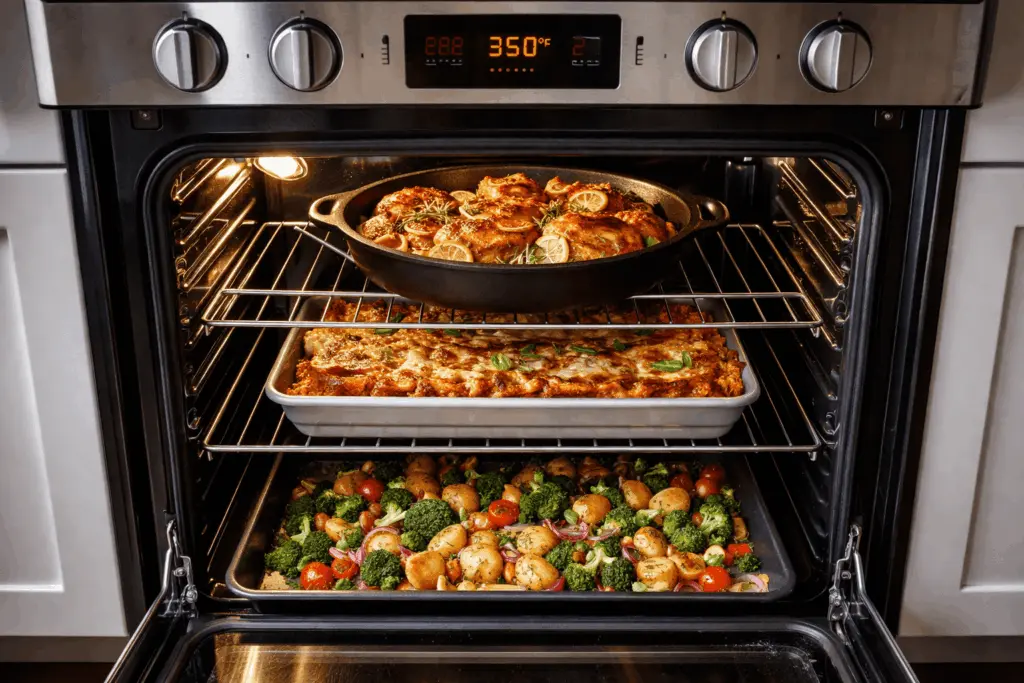
Oven maintenance is mostly about three things: keeping spills off the parts that heat, keeping the door sealed, and checking that the temperature is still true. None of it takes more than a few minutes, and most of it can be done with warm water and a cloth.
Table of Contents
This oven maintenance guide gives you seven tips and a quarterly checklist to print or copy. The self-clean cautions come first, because that cycle causes more oven problems than any other single habit.
Self-clean cautions for oven maintenance
A self-clean cycle heats the oven to a very high temperature to burn off food. It works, but it is also hard on control boards, door locks and thermal fuses. Before you run one, take out the racks unless the manual says they can stay, wipe out loose crumbs and large spills, and open a window or run the range hood.
Keep pets, especially birds, out of the kitchen during the cycle, since the fumes from non-stick coatings and burning residue can be harmful. Never use oven cleaner spray inside a self-cleaning oven unless the manual specifically allows it, and never clean the gasket by hand with abrasives. Do not use the cycle often, as part of any oven maintenance plan. Wiping spills while they are warm means you will need it far less.
7 oven maintenance tips that prevent repairs
- Wipe spills early. Wait for the oven to cool, then wipe sugary or greasy spills before they bake on. Baked-on spills near the element and sensor cause smoke and hot spots.
- Check the door gasket. Look around the rubber seal for tears, gaps or flat spots, and make sure it is free of grime. Close the door on a sheet of paper: if it slides out with no resistance, the seal may be weak.
- Run a calibration test. Place an oven thermometer on the middle rack at 350 degrees and read it after 20 minutes. A difference of 25 degrees or more is worth a note.
- Look at the heating parts. On an electric oven, check the bake element for blisters or breaks. On a gas oven, look for a steady blue flame, not a yellow, lazy one.
- Care for the igniter and burner ports. On a gas model, never scrape the igniter and keep cleaning products away from it. Clear burner ports with a soft brush when the oven is cold.
- Keep the vent clear. Many ovens vent at the back of the cooktop or under the door. Do not cover the vent with foil or place pans against it.
- Do not line the bottom with foil. Foil traps heat and can melt onto the floor of the oven or block the element. Use a sheet of foil on a lower rack to catch drips instead.
Calibration test in the oven maintenance routine
Do this test before a big cooking day, not in the middle of it. Preheat to 350, let the oven cycle at least twice, and read the thermometer each time. Average the highs and lows. Many electronic controls have a calibration offset in the settings menu, found in the manual. A small gap you can offset. A large or changing gap points to the sensor, which a technician should check. Our guide to oven repair signs explains how to tell a minor drift from a real fault.
Why oven maintenance pays off in small ways
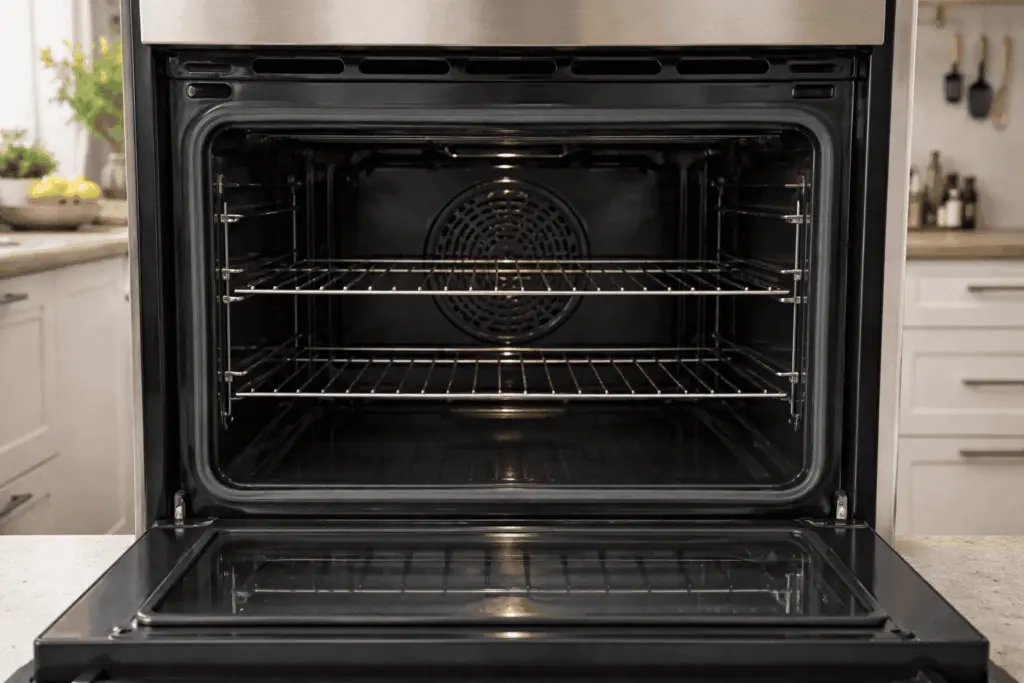
Ovens rarely fail without warning. They give small signals first: a longer preheat, a cake that is darker on one side, a gasket that is stiffer than it used to be. Regular oven maintenance gives you a baseline, so you notice those signals early instead of at the worst moment. It also keeps grease away from the parts that heat, which reduces smoke and lowers the chance of a kitchen fire.
A clean oven also heats more evenly, because a layer of burnt residue changes how heat moves around the cavity. If you cook with sugar or marinades a lot, wipe the floor and the door glass after every second or third use. Keep the racks clean and slide them in and out gently so the rack guides stay straight. For homes with an oven that is used daily, such as rentals and busy family kitchens, check the gasket and the knobs every month rather than every quarter. Landlords and property managers can add the quarterly checklist to a routine unit inspection, which catches wear between tenants.
A quarterly oven maintenance checklist
Copy this oven maintenance list and put a note in the calendar for every three months:
- Wipe the interior, the door glass edges and the gasket with a damp cloth.
- Inspect the gasket for tears and gaps.
- Check the bake and broil elements for blisters (electric) or the flame color (gas).
- Run the thermometer test and write down the result.
- Check the oven light and the knobs for loose fit.
- Clear the area around the range of towels, boxes and plastic.
- Look at the cord and plug behind an electric range, if you can reach it, for heat marks.
- Smell for gas around a gas range. If you smell any, leave and call your gas utility.
Seasonal oven maintenance checks
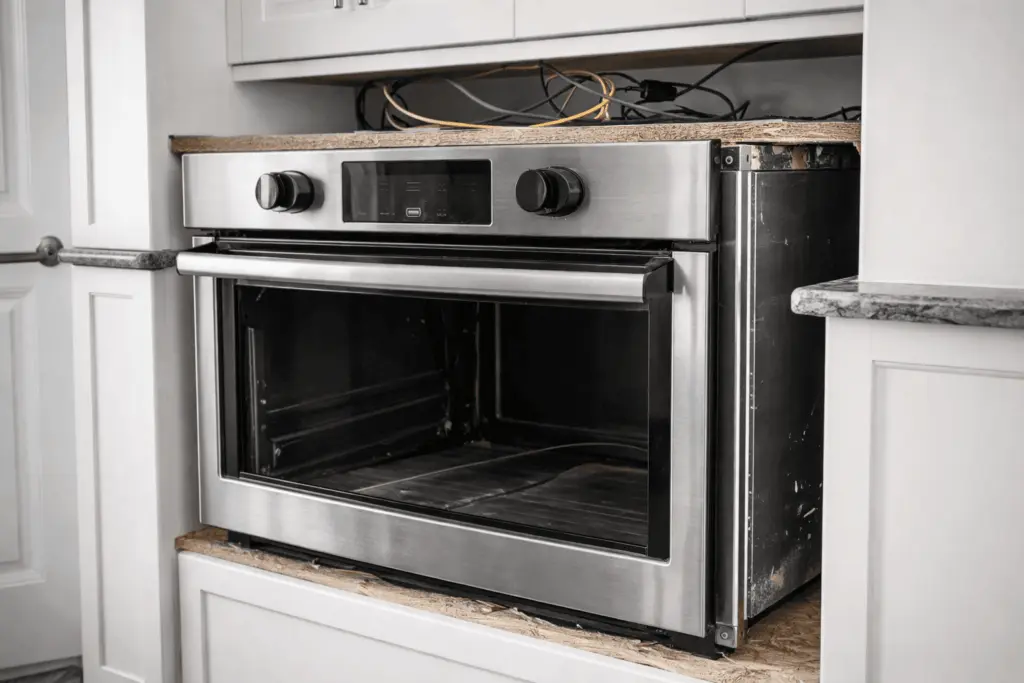
For seasonal oven maintenance, run the checklist before the holidays, a week ahead, so a failed igniter or element does not surprise you on the day. In summer, when the Sacramento area gets hot, long oven sessions heat the whole kitchen, so a good gasket helps and the range hood fan is worth using. In winter, keep cabinets and curtains away from the oven.
If the oven is slow to preheat, our article on an oven not heating has the full list of causes. For general best practice, the NFPA offers cooking safety guidance, including never leaving the oven unattended while it is on.
Stop oven maintenance and call us if you notice this
Switch the oven off, and the breaker too if it is electric, then call for repair if you find sparks, melted wire insulation, a burning smell that does not clear, a cracked door glass or an element that glows in odd places. For a gas oven, a gas smell means leave the house and call the gas utility. Do not light the oven again.
Never bypass a safety thermostat, a door switch or a lock to force a cycle to run. Never repair a gas valve or line yourself. Do not run the oven with the door open to warm the room.
Oven maintenance cuts wear but cannot stop every failure. We repair gas and electric ovens in West Sacramento, Sacramento, Davis, Woodland and the other towns we serve. Our technician arrives in a marked vehicle, offers shoe covers, and brings tools, schematics and common parts. See our oven repair page for more.
If the quarterly checks turn up something you are not sure about, you can book a visit. The service call is $80.
Common questions
How often should I use the self-clean cycle?
As rarely as you can. The high heat stresses door locks and control boards. Wiping spills while the oven is warm means most households need a self-clean only a few times a year, if at all.
How do I know if my oven temperature is off?
Place an oven thermometer on the middle rack, set 350 degrees and read it after 20 minutes. Repeat once the oven has cycled. A steady gap of 25 degrees or more suggests calibration or a sensor problem.
Is foil on the oven floor okay?
No. Foil can trap heat, block airflow, and melt onto the oven floor or element, causing damage. To catch drips, put a sheet pan or a sheet of foil on a lower rack instead, leaving gaps for air.
Related guides
Oven Repair Cost in West Sacramento: What Sets the Price
Nobody can name your oven repair cost before someone looks at the oven. Here is what moves the price up or down, and how…
Oven Not Heating? 8 Causes for Gas and Electric
No heat, low heat or slow heat each point to different parts. Here are eight causes for gas and electric ovens and the safe…
5 Oven Repair Signs and When to Call for Help
Uneven baking can wait; sparks and a gas smell cannot. These five oven repair signs show you which is which, with a simple temperature…