
Dryer Fire Prevention: 8 Steps for Safer Laundry
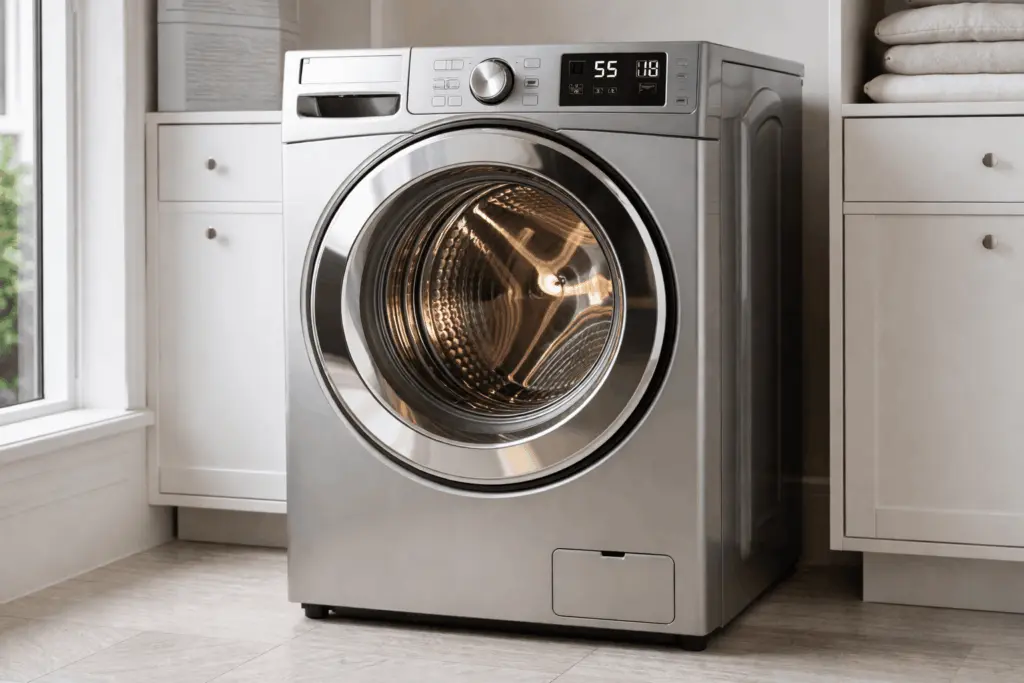
Dryer fire prevention comes down to two habits: keep lint out of the machine and keep air moving through the vent. Most of what follows is free, and none of it needs a tool beyond a vacuum and a screwdriver.
Table of Contents
The numbers explain why dryer fire prevention is worth ten minutes. NFPA’s report on home dryer fires estimates about 13,820 home fires a year in the United States, with 7 deaths, 344 injuries and $233 million in property damage, using 2014 to 2018 data. The leading cause was failure to clean, at 32 percent of the fires. You can read the details in the NFPA home dryer fires report.
Why lint and a blocked vent defeat dryer fire prevention
Every dryer fire prevention habit starts from one fact: a dryer is a heater with a fan. Hot air picks up lint, which is fine, dry, fibrous and easy to ignite. If the duct is restricted, the air cannot leave, the heater cycle runs longer, and lint settles around the burner, the element and the duct walls. Good dryer fire prevention is simply making sure that air has a clear, short, smooth way out.
That is also why a dryer that takes two cycles to dry a load deserves attention. It is telling you the airflow is poor before it becomes a hazard. Cleaning schedules differ with the household: a couple doing two loads a week and a family doing a load every day do not need the same routine, and pet hair adds a lot of lint. Choose a schedule you will actually follow and write it on the laundry-room wall.
8 steps for dryer fire prevention that actually work
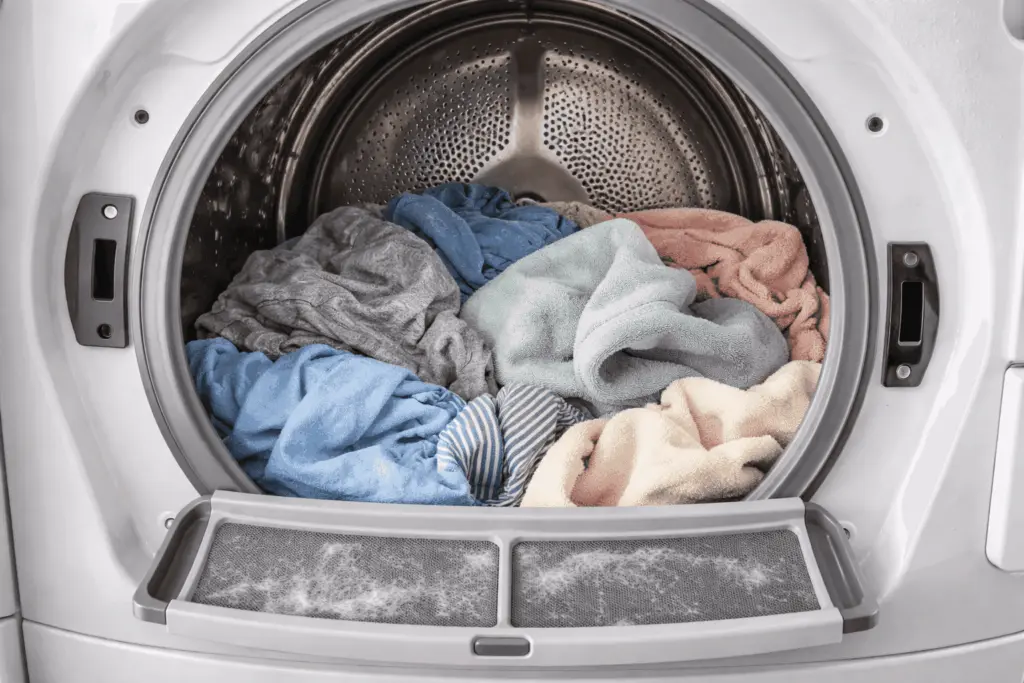
- Clean the lint screen before or after every load. Pull it out, roll off the lint, and look through the mesh. If the screen looks clean but water poured on it pools instead of draining, wash it with warm soapy water and a soft brush. Fabric-softener film clogs the mesh.
- Vacuum the lint housing. Use a narrow vacuum nozzle or a long lint brush down the slot where the screen sits. Lint collects there where you cannot see it.
- Clean the whole vent run at least once a year. Disconnect the duct, vacuum it and the dryer’s exhaust outlet, and clean from the outside hood back toward the dryer if you can. Do it more often for a large family, for pets, or for a long or bent duct.
- Check the outside hood. The flap should open freely when the dryer runs and close when it stops. Remove any screen across the opening, because it catches lint.
- Replace plastic or foil accordion duct with rigid or semi-rigid metal. Ridged vinyl and thin foil sag, trap lint and can ignite. Smooth metal with taped joints is the standard.
- Do not run the dryer when you leave or go to bed. The best dryer fire prevention is being home to notice. A problem is far easier to catch when someone is home to smell it.
- Keep the area around the dryer clear. Dryer fire prevention includes the room, not just the duct. Move baskets, cleaning products and cardboard away from the cabinet and the back of the machine.
- Look at the outside of the machine. Check it each time you clean the lint screen. Scorch marks, a hot cabinet, loud rattles or a burning smell mean stop and unplug the dryer.
A two-minute airflow test for dryer fire prevention
Run the dryer on high heat and go to the outdoor hood. A strong, steady flow of warm air that pushes the flap wide open is what you want. Weak air, a flap that barely lifts, or lint blowing out in clumps suggests a restriction. If the laundry room also feels humid or the dryer is hot to the touch, treat the vent as blocked until it is proven otherwise.
This is a good habit to carry into dryer fire prevention generally: test it, do not assume it.
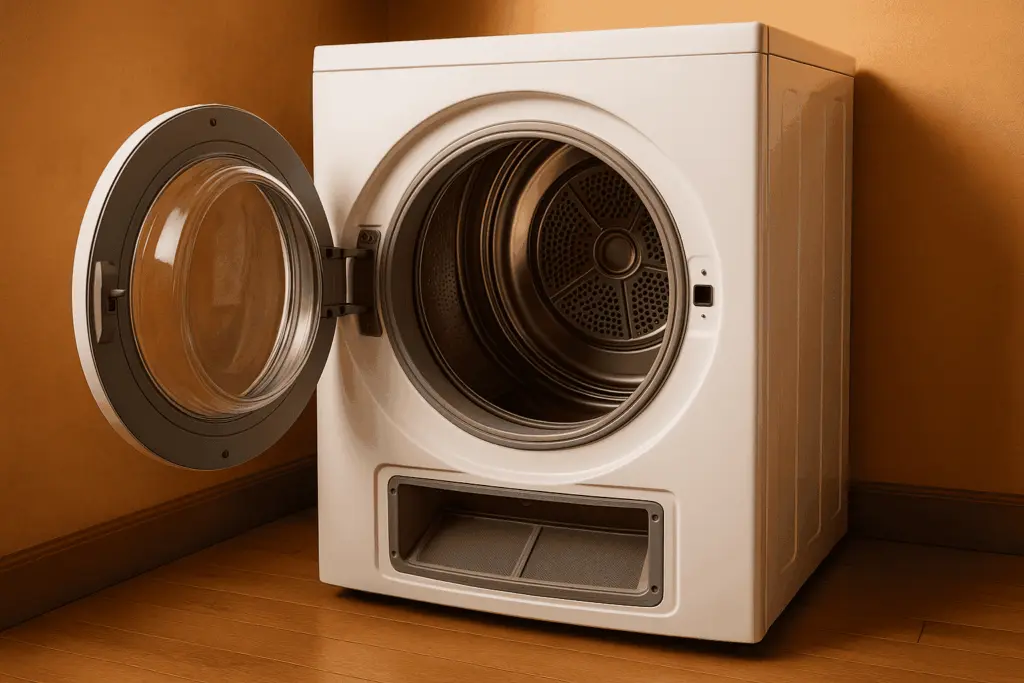
Signs your vent is clogged
- Clothes are damp after a full cycle, or need a second run.
- The clothes and the dryer top are much hotter than normal.
- You smell something burning or a musty smell in the laundry room.
- Lint collects around the door, on the floor behind the dryer or on the outdoor wall.
- The outside flap hardly moves.
- The dryer stops mid-cycle, because the high-limit thermostat or thermal fuse tripped.
If the dryer is going cold rather than hot, our article on a dryer not heating explains the usual causes. A blown thermal fuse almost always means airflow trouble, so clear the vent as part of the fix.
What never to put in the dryer: a dryer fire prevention rule
Do not dry anything that has met flammable liquid, even if it has been washed. Cooking oil, gasoline, paint thinner, lighter fluid, nail polish remover, alcohol and some cleaners can stay in fabric after a wash and ignite from the heat. Hang those items outside to air out, or follow your local waste guidance for anything that is soaked.
Also avoid foam rubber, rubber-backed mats, items with plastic and anything labeled “dry flat” or “no heat”. Overloading the drum matters too, because tightly packed laundry blocks air and loads the motor.
Gas dryers and dryer fire prevention
Gas dryer fire prevention has one extra step. The dryer has a burner, so check for lint around it only with the machine off. If you ever smell gas, leave the house, do not use switches or flames, and call your gas utility from outside. Never adjust a gas valve or connector yourself. After any move or hookup, a qualified professional should test the connections. Our page on dryer installation explains what a safe gas hookup includes.
Stop and call a technician if
Unplug the dryer, or switch off its breaker, and book a repair if you see scorching, melted plastic, smoke, sparks or flames inside the drum. Do the same if a breaker trips more than once, the outside of the cabinet is too hot to touch, or lint is built up around the heating parts. If a fire starts, do not open the door, because air feeds it. Switch the power off if it is safe to do so, leave the home and call 911.
Dryer fire prevention also means never defeating the thermal fuse or high-limit thermostat to keep the dryer running. Those parts are the dryer’s last defense against overheating. If they keep failing, the cause is somewhere else, usually airflow, and the cause has to be found.
We handle dryer repair for gas and electric dryers in West Sacramento, Sacramento, Davis, Woodland and the other towns we serve. Our technician arrives in a marked vehicle, with shoe covers on offer and common parts on board, so many jobs are finished the same day.
Dryer fire prevention is not a one-time job, so put the annual vent cleaning on your calendar. If you would like a technician to look over your dryer and its connections, you can book a visit. The service call is $80.

Common questions
How often should a dryer vent be cleaned?
At least once a year is a common guideline, and more often with pets, big loads or a long, bent duct. If drying times grow or the vent hood barely opens, clean it sooner.
Is foil or vinyl accordion duct really that risky?
Yes. The ridges catch lint, the duct sags and crushes easily, and thin vinyl can burn. Smooth rigid or semi-rigid metal duct with taped joints moves air better and is far easier to clean.
Can I clean the vent myself?
Usually, with the dryer unplugged, a vacuum and a brush kit. Stop if the duct is inside a wall you cannot reach, if a gas line is in the way, or if you find scorching.
Related guides
Dryer Installation: 7 Steps to Hook Up a New Dryer
A good dryer installation depends on the outlet, the gas connection and the duct. These seven steps cover each one and show when to…
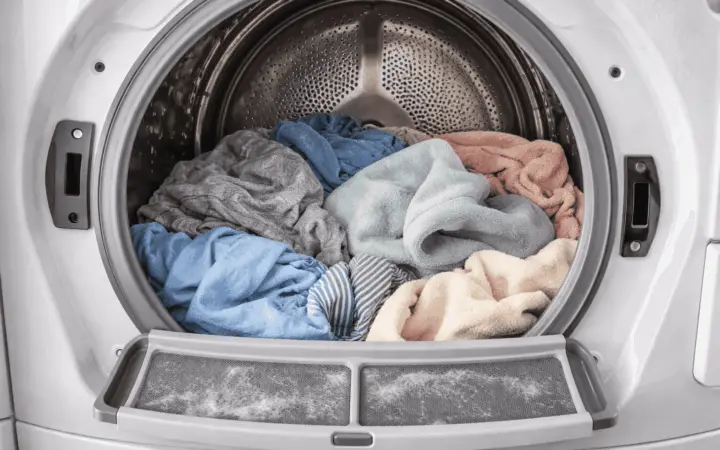
Dryer Not Heating? 7 Causes and Fixes
A dryer that spins but stays cold usually has one of seven causes, starting with the vent. Here is the order to check them…
Oven Repair Cost in West Sacramento: What Sets the Price
Nobody can name your oven repair cost before someone looks at the oven. Here is what moves the price up or down, and how…